Thai Catering Versus Buffet Catering for Events
August 11, 2026
Thai Food for Wedding Reception Guests Love
August 15, 2026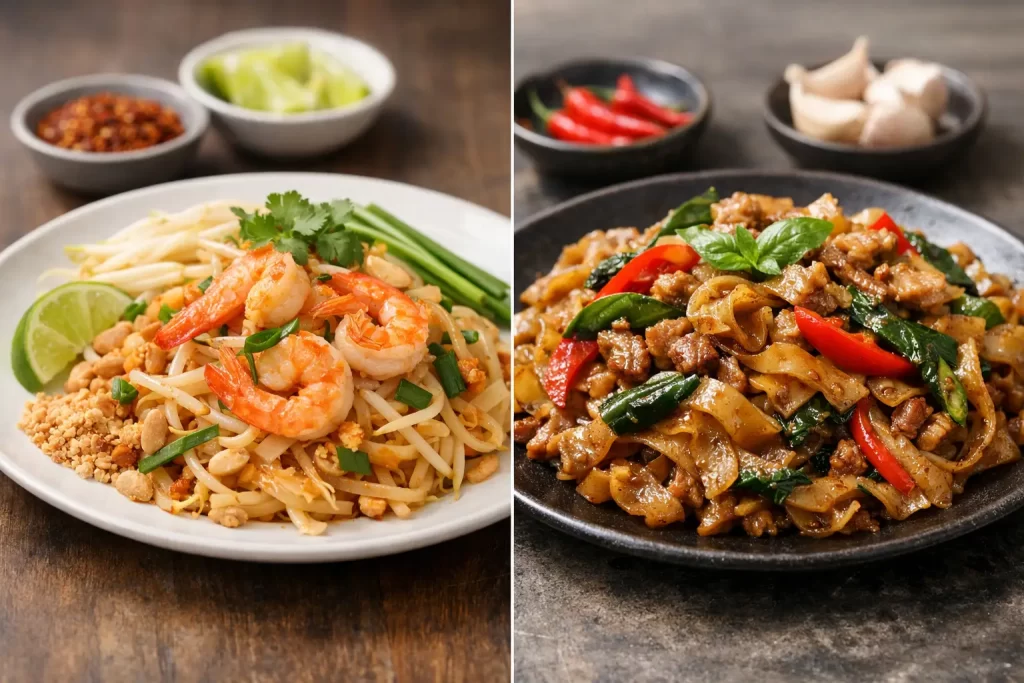
The choice usually happens fast: you are hungry, the Thai menu is open, and two noodle favorites are calling your name. In the debate of pad thai versus drunken noodles, there is no wrong answer. There is, however, a big difference in flavor, heat, texture, and the kind of meal you are craving.
Pad Thai is the familiar crowd-pleaser – sweet-tangy, nutty, and wonderfully balanced. Drunken noodles, also known as Pad Kee Mao, bring a bolder, hotter personality with wide rice noodles, fragrant basil, and a savory wok-charred finish. Knowing what sets them apart makes ordering for yourself, your table, or your next Thai food gathering much more delicious.
Pad Thai Versus Drunken Noodles: The Quick Difference
Pad Thai is built around balance. Stir-fried rice noodles are coated in a sauce that typically combines tamarind, palm sugar, fish sauce, and lime. The result is a dish that moves between sweet, sour, salty, and savory in every bite. Crushed peanuts add crunch and richness, while bean sprouts and chives keep the dish fresh.
Drunken noodles take a more savory and spicy route. They are usually made with broad, chewy rice noodles stir-fried over high heat with chili, garlic, Thai basil, vegetables, and a dark, flavorful sauce. Instead of Pad Thai’s tamarind-led brightness, Pad Kee Mao often tastes deeper, smokier, and more herbal.
If you want a simple shortcut, choose Pad Thai for sweet-tangy comfort and drunken noodles for spicy, aromatic intensity. But the details are where these two Thai classics really shine.
The Noodles Create Two Different Experiences
Noodle shape matters more than many diners realize. Traditional Pad Thai generally uses thinner flat rice noodles. They soak up sauce easily and create a soft, tender texture with a little chew. When stir-fried well, the noodles stay separate rather than turning heavy or sticky.
Drunken noodles are known for their wide rice noodles. Their larger surface area catches the savory sauce and holds up beautifully to high-heat wok cooking. The texture is broader, chewier, and more substantial, especially when the edges pick up a touch of char from the wok.
That difference changes the whole mood of the meal. Pad Thai feels lighter and more layered, with crunch from sprouts and peanuts breaking up the noodles. Drunken noodles feel heartier and more direct, with each wide ribbon delivering sauce, chili, basil, and vegetables at once.
Sauce: Bright Balance or Savory Heat?
Pad Thai sauce is one of Thai cuisine’s most recognizable flavor combinations. Tamarind provides a fruity sourness that is distinct from lemon or vinegar. Palm sugar softens the tang, while fish sauce gives depth and saltiness. A squeeze of lime at the table can make the whole dish taste brighter and more alive.
The sauce for drunken noodles is less about sweetness and more about depth. Soy-based seasonings, garlic, chili, and other savory elements create a dark, glossy coating. Thai basil is essential to the dish’s character, bringing a peppery, slightly sweet fragrance that rises above the heat.
Neither profile is better. It depends on what your appetite wants. A diner looking for contrast and balance may reach for Pad Thai. Someone who wants a rich, spicy plate with a satisfying wok-fired flavor may prefer drunken noodles.
How Spicy Are Drunken Noodles?
Pad Thai is usually mild by default. It can have a gentle warmth from dried chili, but its core flavor is more sweet, tangy, and nutty than fiery. That makes it an easy choice for sharing with children, first-time Thai food diners, or anyone who likes to control spice at the table.
Drunken noodles are commonly served with more heat. Fresh chilies are a major part of the dish, and the spice is meant to work with the aromatic basil and savory sauce rather than sit quietly in the background. Depending on the kitchen, it can range from a pleasant kick to a serious chili-forward experience.
The name does not mean the dish contains alcohol. There are several stories behind it, including the idea that its bold spice makes it a memorable late-night meal. What matters when ordering is that Pad Kee Mao is designed to be lively, fragrant, and assertive.
If you enjoy spice but do not want it to overpower everything else, ask for a medium level when that option is available. You should still taste the basil, garlic, vegetables, and noodles, not only the chili.
Ingredients and Toppings Tell the Story
Pad Thai often arrives with a mix of bean sprouts, chives, egg, crushed peanuts, and lime. These are not decorative extras. They create the dish’s signature contrast: soft noodles against crisp sprouts, rich sauce against fresh lime, and chewy rice noodles against crunchy peanuts.
Drunken noodles usually feature vegetables such as broccoli, bell peppers, baby corn, onions, or leafy greens, depending on the kitchen. Protein choices vary, but the defining ingredients are the wide noodles, chilies, garlic, and Thai basil. It is a dish that feels generous, colorful, and full of wok-fried energy.
For diners with dietary preferences or allergies, it is always wise to ask about the sauce and toppings. Peanuts are a classic Pad Thai component, while both dishes may use seafood-based seasonings or egg. Thai food is wonderfully adaptable, but clear communication helps the kitchen guide you to the right plate.
Which Dish Is Better for Your Craving?
Order Pad Thai when you want an approachable Thai classic that feels satisfying without being aggressively spicy. It is a strong pick for lunch, a casual family dinner, or a table where everyone has different heat preferences. The sweet-sour sauce and peanut crunch make it especially appealing when you are craving familiar comfort with plenty of flavor.
Choose drunken noodles when you want something bolder. It suits the mood for a late dinner, a shared meal with spice-loving friends, or any day when plain comfort food will not do. The basil aroma, chili heat, and chewy broad noodles make it feel more intense and deeply savory.
For a group meal, ordering both is often the smartest move. Pad Thai gives the table a bright, balanced noodle dish, while drunken noodles bring the heat and aromatic depth. Add a tangy soup or a crisp vegetable dish, and you have a spread with enough contrast to keep every bite interesting.
What Makes a Great Version of Each Dish?
Excellent Pad Thai should not taste like plain noodles coated in sweetness. The tamarind should be noticeable, the sauce should cling without drowning the noodles, and the lime, sprouts, and peanuts should bring freshness and texture. Balance is the standard.
Excellent drunken noodles should smell of basil and high-heat stir-frying before you take the first bite. The noodles should be tender but resilient, the sauce savory rather than flat, and the chili should feel exciting without erasing the other ingredients. A little wok char is a welcome sign of flavor.
At Soi 55, Thai street-inspired favorites are made for the kind of meals people want to talk over and share. Whether you lean toward Pad Thai’s tangy comfort or the vibrant heat of drunken noodles, the best choice is the one that matches your craving – and leaves you planning your next Thai meal before the plate is cleared.