Thai Food Near Me for Bold Everyday Dining
October 8, 2026
12 Best Thai Dishes to Try in Malaysia Today
October 12, 2026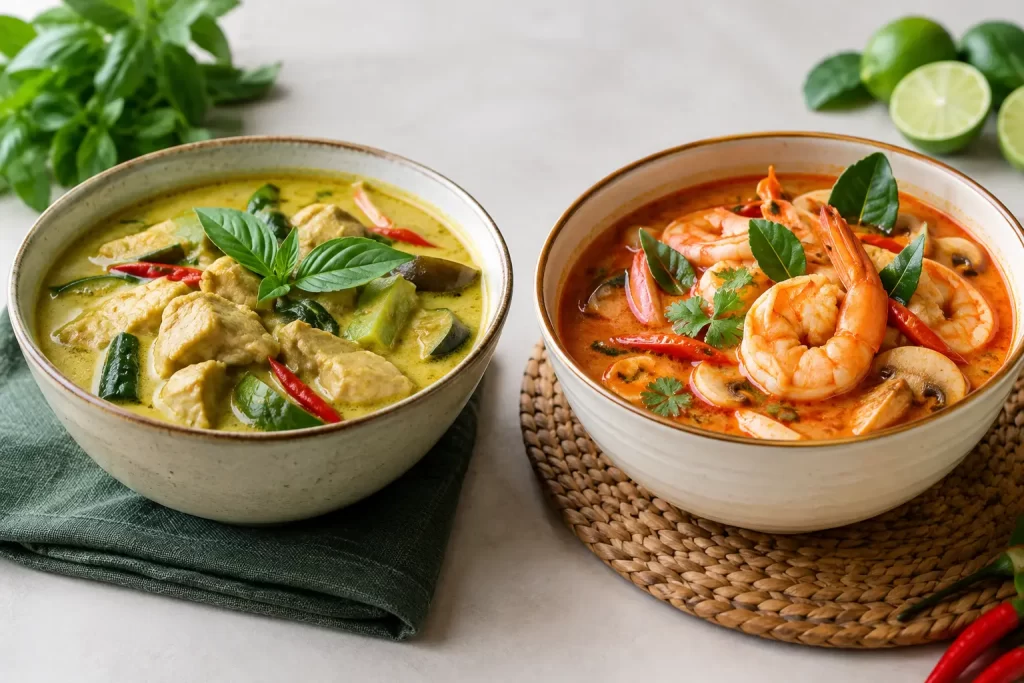
A steaming bowl arrives at the table, fragrant with lemongrass, chilies, and lime. The question is not whether it will be flavorful. It is whether you are in the mood for silky richness or a bright, fiery kick. In the Thai curry vs tom yum debate, both dishes bring serious character, but they satisfy very different cravings.
Thai food is built on balance: spicy, sour, salty, sweet, and aromatic notes working together rather than competing. Curry and tom yum both showcase that balance beautifully. Still, the texture, ingredients, and best occasions for ordering each one are not quite the same.
Thai Curry vs Tom Yum: The Core Difference
Thai curry is usually a fuller, more comforting dish with a sauce that coats rice, vegetables, and your chosen protein. Depending on the style, it may be creamy with coconut milk or lighter and brothier. Curry paste provides its foundation, bringing together ingredients such as fresh chilies, galangal, lemongrass, garlic, shallots, and Thai herbs.
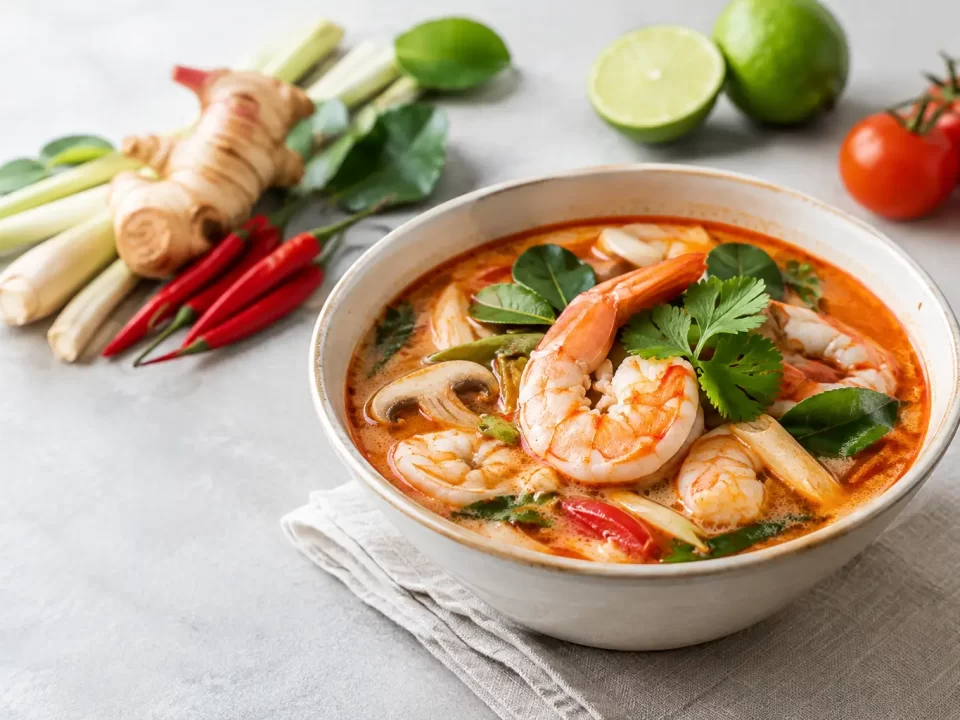
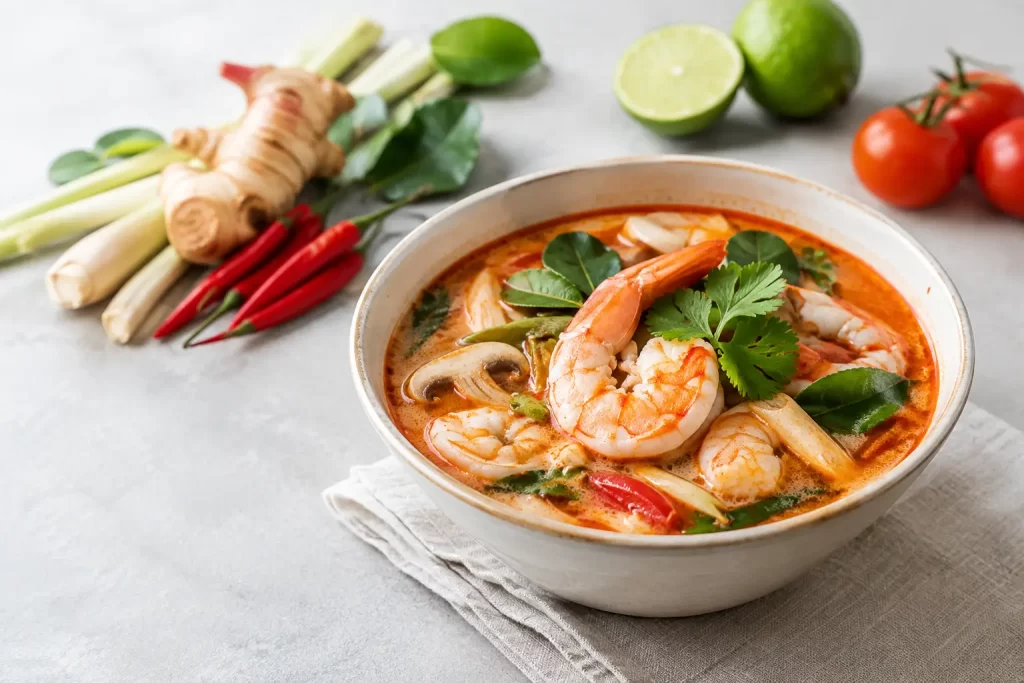
Tom yum is a hot and sour soup known for its lively, aromatic broth. Lemongrass, kaffir lime leaves, galangal, lime juice, chilies, and fish sauce give it a sharp, clean flavor profile that wakes up the palate from the first spoonful. Seafood is a classic choice, though chicken and other variations are also popular.
Put simply, curry is about depth and body, while tom yum is about brightness and lift. One feels like a satisfying main dish built around rice. The other can be a meal on its own, a sharing soup for the table, or the exciting contrast that makes a larger Thai spread feel complete.
What Thai Curry Tastes Like
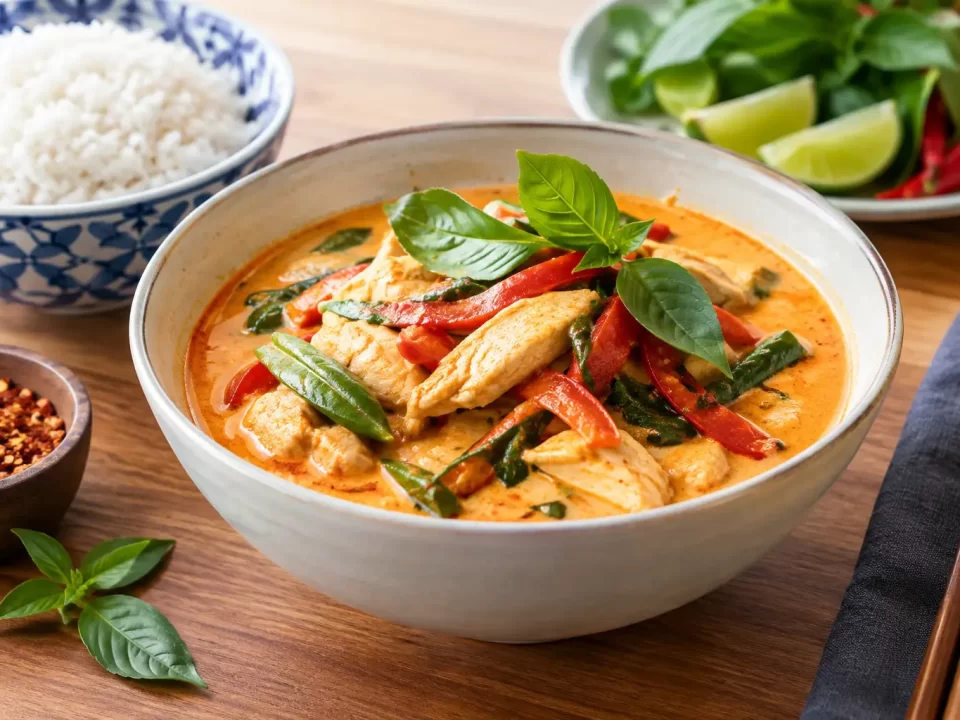
Thai curries are not one single flavor. Green curry often tastes fresh, herbaceous, and spicy, with green chilies and Thai basil contributing its distinctive character. Red curry is generally warmer and more rounded, with dried red chilies providing color and a deeper heat. Yellow curry leans toward mellow spice and gentle earthiness, often carrying turmeric-like notes.
Coconut milk is a major reason many diners reach for curry. It softens the chili heat and gives the sauce a smooth, velvety texture. That richness makes curry especially satisfying with fluffy steamed rice, which catches every bit of sauce and helps balance a more spirited spice level.
A good curry should not taste flatly sweet or simply hot. It should have fragrance first, then layers of savory flavor, gentle sweetness, and heat that builds without hiding the ingredients. Vegetables should retain some bite, while the protein should absorb the sauce without getting lost in it.
When curry is the right choice
Choose Thai curry when you want a hearty, relaxed meal that feels complete and comforting. It works brilliantly for a lunch that needs to carry you through a busy afternoon, a casual dinner with family, or a table where everyone wants to share rice and several dishes.
Curry is also a friendly starting point for diners who enjoy spice but prefer it rounded out by creaminess. That does not mean it is always mild. A green curry can deliver plenty of heat. The difference is that coconut milk gives the dish a softer landing than a clear, sour soup.
What Makes Tom Yum So Addictive
Tom yum does not quietly sit in the background. Its aroma reaches the table before the bowl does, carrying citrusy lemongrass, savory broth, and the unmistakable edge of chili. The first taste is often sour and savory, followed by herbal fragrance and a warming spice that lingers just long enough to invite another spoonful.
The sourness usually comes from fresh lime, while galangal adds a peppery, woody note that is different from ginger. Kaffir lime leaves bring perfume, and mushrooms add an earthy counterpoint to the clean broth. In a seafood tom yum, prawns or other seafood contribute natural sweetness that makes the tangy broth even more irresistible.
There are also different tom yum styles. A clear version feels light, sharp, and refreshing. A creamier version has a richer body and a more mellow finish, while keeping the signature hot-and-sour personality intact. Neither is better than the other. It depends on whether you want a brisk, palate-cleansing soup or something with more comforting richness.
When tom yum is the right choice
Order tom yum when you want a dish with energy. It is excellent on a warm day, when you are craving something bold but not heavy, or when your table is ordering fried, grilled, or stir-fried dishes that benefit from a bright, sour contrast.
It is also a natural choice for group dining. A shared bowl of tom yum gives everyone a little heat and tang between bites of Pad Thai, basil stir-fries, or steamed rice. For office lunches and family meals, that contrast can make a familiar meal feel more festive without making the order complicated.
Spice Level: Is Thai Curry or Tom Yum Hotter?
There is no universal winner because heat depends on the recipe, the chili used, and how the kitchen prepares the dish. Still, tom yum often feels hotter more quickly because its sour broth makes the chili taste vivid and direct. The sharpness of lime and the warmth of chilies are front and center.
Thai curry can be just as spicy, particularly green curry, but its richness changes the experience. Coconut milk spreads the heat across the palate, so the spice may feel more gradual even when the dish uses plenty of chilies.
If you are cautious with heat, do not assume yellow curry is always mild or that creamy tom yum will have no kick. Ask for a spice level that suits your table. Thai food is most enjoyable when the flavors are clear enough to taste, not when the heat overwhelms everything else.
Nutrition and Fullness: It Depends on Your Order
Neither dish needs to be labeled as the “better” choice. The more useful question is what you want from your meal. A coconut-based curry is usually more filling and richer, especially when enjoyed with rice. It can be the satisfying answer to a serious hunger.
Tom yum can feel lighter because of its broth, herbs, mushrooms, and citrusy profile. If seafood or chicken is included, it can still be a substantial meal. Add rice if you want something more filling, or pair the soup with a vegetable or stir-fried dish for a shared table.
The ingredients matter more than broad assumptions. Portion size, protein choice, coconut milk, rice, and sides all change the final meal. The best order is the one that fits your appetite and gives you the kind of flavor experience you came for.
How to Order for the Table
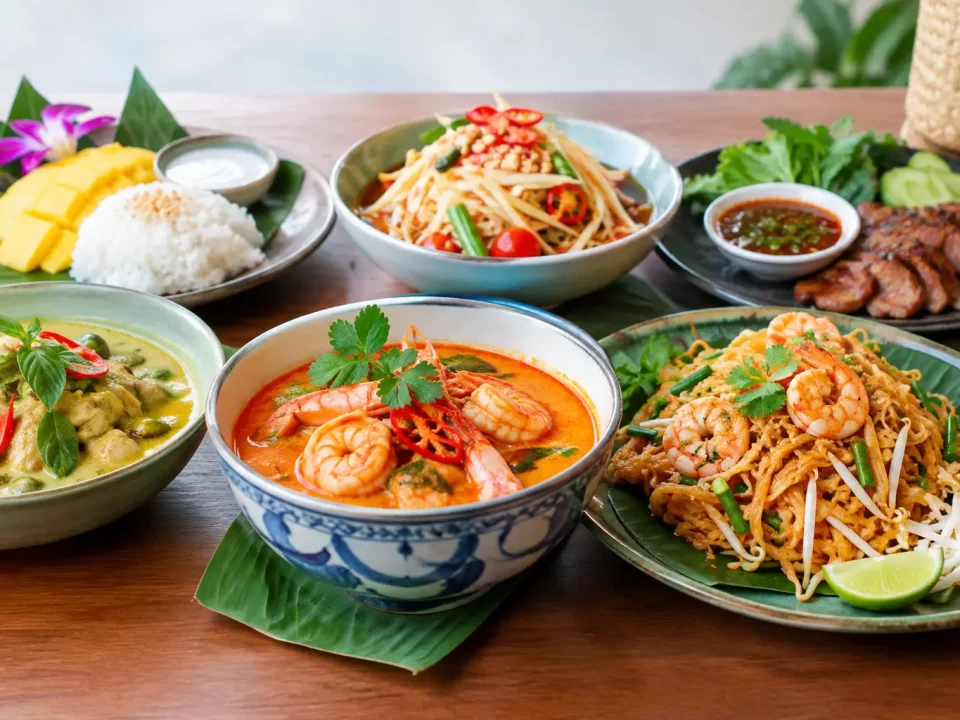
If your group cannot decide between Thai curry and tom yum, there is a deliciously simple solution: order both. Curry gives the table a rich sauce for rice, while tom yum cuts through with hot-and-sour freshness. Together, they show two sides of Thai cooking – comforting depth and lively brightness.
For a smaller meal, let your mood lead. Choose curry when you want warm, creamy, sauce-soaked satisfaction. Choose tom yum when you want aromatic broth, citrusy tang, and a little extra excitement in every bite. If you are sharing with friends, pairing one of each means no one has to compromise.
At SOI 55 Thai Kitchen, that is the joy of a Thai meal: bold and delicious tastes made for everyday lunches, catch-ups, and tables that like to pass dishes around. Trust the craving, order with a little contrast, and let the last spoonful decide what you will come back for next time.