12 Best Thai Dishes to Try in Malaysia Today
October 12, 2026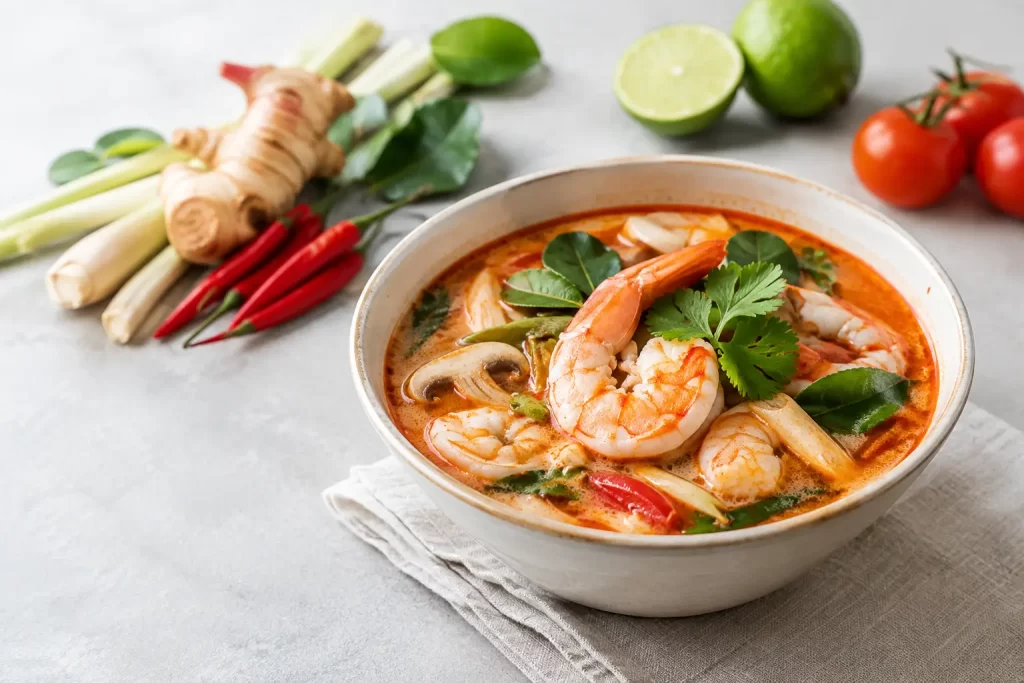
A great bowl of tom yum announces itself before the first spoonful. You catch the citrusy lift of lemongrass, the warm perfume of galangal, and a chile heat that wakes up the appetite. To identify authentic tom yum, look beyond whether it is spicy or creamy. The real character is in balance: sour, savory, hot, fragrant, and deeply satisfying without one flavor drowning out the rest.
For Malaysian diners who already know and love Thai food, tom yum can feel familiar. Yet familiar does not mean simple. This famous soup depends on careful timing, fresh aromatics, and a confident hand with seasoning. Here is how to recognize the flavors and details that give a bowl its Thai heart.
What Makes Tom Yum Taste Authentically Thai?
Tom yum is not meant to be a flat, one-note hot soup. Its flavor moves in layers. The first taste may be bright with lime, followed by savory depth, a clean chile kick, and the lingering fragrance of herbs. A good version feels lively rather than heavy, making you want another spoonful and another bite of rice.
The key is contrast. Lime brings sharpness, fish sauce contributes savory richness, chiles add heat, and a small touch of sweetness rounds the edges. None of these should dominate. If the broth tastes only salty, only sweet, or only like packaged spice, it has lost the balance that makes tom yum so memorable.
Authenticity also does not require every restaurant to serve an identical bowl. Thai cooking has regional habits, family recipes, and chef-led interpretations. What matters is that the defining flavors are treated with respect and kept recognizable, not covered up by heaviness or unnecessary additions.
Identify Authentic Tom Yum Through Its Aromatics
Before tasting, take a moment to smell the soup. Fresh aromatics are one of the clearest signs of a carefully made tom yum. You should notice lemongrass with its lemony, grassy scent; galangal with its peppery, pine-like warmth; and makrut lime leaves, which bring a distinctive citrus fragrance that ordinary lime alone cannot replace.
These ingredients are not merely garnish. They create the broth’s backbone. Lemongrass is often cut into short lengths and lightly crushed so its oils infuse the soup. Galangal usually appears in pale slices, while lime leaves may be torn to release their aroma. They are commonly left in the bowl for flavor, rather than intended to be eaten like the mushrooms or seafood.
A bowl that smells fragrant, fresh, and immediately appetizing is usually headed in the right direction. The aroma should feel clear and energetic, not dull, overly creamy, or dominated by a single seasoning.
The difference between galangal and ginger
Galangal is sometimes mistaken for ginger, but the two do not taste the same. Ginger is warmer and more familiar, while galangal has a firmer texture and a sharper, more floral quality. A thoughtful Thai kitchen uses galangal because it gives tom yum its distinctive lift.
That said, ingredients can vary with season and supply. The bigger question is whether the finished broth still carries that signature aromatic profile. A chef who understands the dish will build flavor thoughtfully, even when working with the practical realities of a busy neighborhood kitchen.
The Broth Should Be Bright, Not Blunt
Authentic tom yum broth has clarity of flavor. Even a richer style should feel awake on the palate. Lime juice is usually added near the end, preserving its fresh tartness instead of cooking it into a muted acidity. The sourness should make your mouth water, not make you wince.
Savory seasoning is just as important. It gives the broth body and a satisfying finish, particularly in seafood tom yum, where prawns, squid, fish, or mussels add their own natural sweetness. When the seafood is fresh and properly cooked, it tastes tender and clean, never rubbery or masked by an overly aggressive broth.
The chile heat should build rather than attack all at once. Some bowls are hotter than others, and personal heat preference always matters. But heat alone is not proof of authenticity. In a well-made tom yum, chile works alongside sourness and aroma. It should make the soup more exciting, not erase every other flavor.
Clear or Creamy: Both Can Be True to Tom Yum
One common mistake is believing that only one style of tom yum is authentic. Thai cuisine offers both clear and creamy expressions, and each has its place.
Tom yum nam sai is the clearer style. Its broth is light, transparent, and especially focused on herbs, lime, and chile. This is often the best choice for diners who want the sharp, refreshing side of the dish to shine.
Tom yum nam khon has a fuller, more velvety broth. It may include roasted chile paste and a creamy element that softens the heat while adding depth and a warm orange hue. The flavor should still be tangy and fragrant. If creaminess turns the soup into something rich but bland, the essential tom yum character has slipped away.
So, should you choose clear or creamy? It depends on your mood and what you are ordering alongside it. A clear tom yum can be especially refreshing with stir-fried dishes, while a creamy version feels comforting when shared with rice and a spread of Thai favorites. Neither style is automatically better. The test is whether the classic sour-spicy-herbal balance remains present.
Look at the Ingredients, but Taste the Balance
Mushrooms, tomatoes, onions, and seafood often appear in tom yum, but the exact combination can differ. Ingredients should support the broth instead of crowding it. Mushrooms bring an earthy bite, tomatoes offer gentle sweetness and acidity, and seafood adds richness to the stock.
Pay attention to texture as well. Seafood should be cooked close to the moment it is served. Prawns should have a springy bite, squid should be tender, and vegetables should not collapse into the broth. These details may sound small, but they separate a bowl made with care from one that has been left sitting too long.
Color offers a clue, though it is not a final verdict. Clear tom yum may look golden or lightly amber, while creamy tom yum can range from pale orange to deeper red-orange. What matters more is whether the color comes with genuine flavor: fragrant herbs, chiles, and savory broth rather than an artificial-looking sauce.
Why Freshness Matters More Than a Perfect Formula
Tom yum is a dish that rewards a kitchen’s instincts. Fresh lime, herbs, and seafood need to come together at the right point. Cook the lime too long and it loses brightness. Leave herbs uninspired and the broth loses its fragrance. Overcook seafood and even a beautifully seasoned soup becomes less enjoyable.
This is why the best tom yum often feels generous but never cluttered. Every spoonful has purpose. You get the sparkle of citrus, the warmth of galangal, the savoriness of the broth, and enough heat to keep the flavors moving.
At SOI 55 Thai Kitchen, this is the kind of balance that makes Thai food an easy choice for a midweek meal, a family table, or a lively catch-up with friends. Tom Yum Seafood is more than a spicy soup to share. It is a bold, delicious taste of the Thai kitchen’s ability to make contrasting flavors feel completely at home together.
How to Order Tom Yum With Confidence
If you are trying a restaurant’s tom yum for the first time, start by choosing the style you genuinely enjoy. Ask for clear broth if you love clean, citrus-forward flavors, or select the creamy version if you want more depth and softness around the heat. If heat is a concern, request a level that lets you taste the herbs rather than simply endure the chiles.
Then give the bowl a proper moment. Smell it first. Taste the broth before adding anything else. Notice whether the sourness feels fresh, whether the aromatics are present, and whether the savory finish invites another spoonful. This is a much better way to judge tom yum than relying on appearance alone.
The next time a steaming bowl reaches your table, let the aroma lead. A bright squeeze of lime, a burst of lemongrass, and a warm chile finish can turn an everyday meal into the kind of Thai dining moment worth sharing.