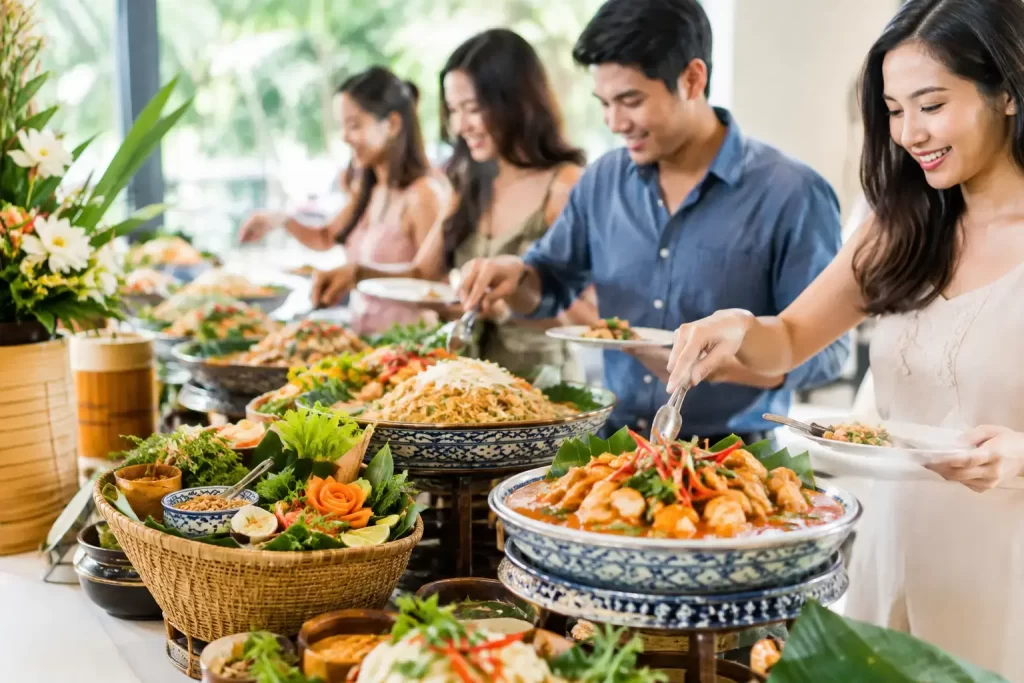
How to Customize Event Catering for Thai Flavor
November 1, 2026
Thai Takeaway Guide for Better Midweek Meals
November 5, 2026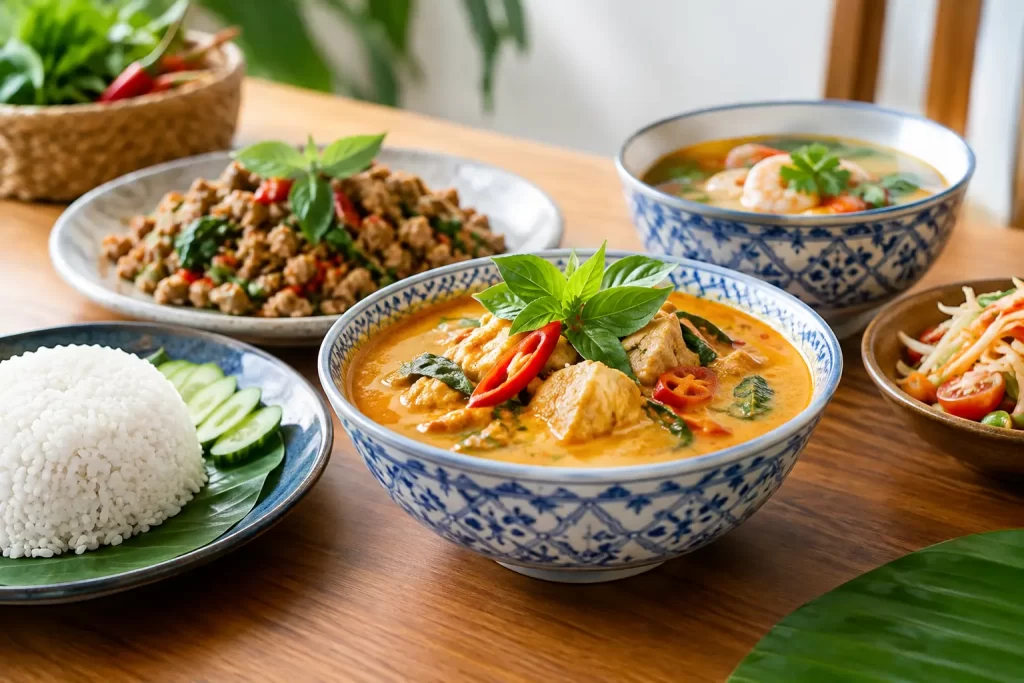
A great Thai meal should feel generous from the first spoonful of soup to the last sip of Thai milk tea. This Thai halal dining guide is for diners who want that full experience: bright herbs, satisfying rice and noodles, shareable plates, and clear confidence in what is on the table. Whether it is a quick Wednesday dinner, a family gathering, or lunch with colleagues, the right restaurant makes bold Thai flavor easy to enjoy.
What Makes Thai Dining So Good for Sharing
Thai food is built around contrast. A bowl of Tom Yum can bring heat, tang, fragrance, and depth in one memorable spoonful. A stir-fry may balance savory basil with a touch of sweetness, while a cool drink resets the palate between bites. That variety is why Thai dining works so naturally for couples, families, and groups with different appetites.
For halal-conscious diners, the best experience starts with clarity, not assumptions. Thai cuisine has a wide range of recipes and regional traditions, and each restaurant has its own kitchen practices, suppliers, and menu approach. Ask directly about halal status, certification where applicable, ingredient sourcing, and preparation procedures. A welcoming restaurant should be ready to answer clearly and respectfully.
It also helps to think beyond one main dish. Thai food becomes more enjoyable when the table has a little contrast: something soupy, something wok-fired, a rice or noodle dish, vegetables, and a refreshing drink. Everyone gets a taste of more than one flavor, and the meal feels like an occasion even on an ordinary weeknight.
Thai Halal Dining Guide: Start With the Menu
A broad menu gives diners more room to choose according to appetite, spice preference, and the people at the table. Begin with familiar favorites, then add one or two dishes that bring a different texture or level of heat.
Choose a signature soup for the center of the table
Tom Yum Seafood is often the dish that sets the tone. Its aromatic broth brings together the lively character many diners expect from Thai cooking, and it is especially suited to sharing. Ordering soup for the table is practical too: it adds warmth, gives lighter eaters something satisfying, and pairs well with rice, noodles, or stir-fried dishes.
If your group includes young children or guests who prefer gentler flavors, ask which soups or dishes offer a milder profile. Heat is only one part of Thai flavor. Citrus, herbs, aromatics, and savory depth can still make a milder dish feel exciting.
Add a noodle dish everyone recognizes
Pad Thai is a smart choice when a group wants comfort and familiarity. The appeal is in its balance: tender noodles, savory seasoning, fresh garnishes, and a satisfying wok-cooked character. It can stand alone for a solo lunch, but it also works beautifully as part of a shared spread.
For a busy office lunch, noodle dishes are often easier to organize than a table full of individual orders. They are filling, recognizable, and easy to pair with a shared soup or vegetables. For larger gatherings, ask about portions and whether dishes can be arranged for group dining so everyone has enough to enjoy.
Bring in basil and rice for a heartier meal
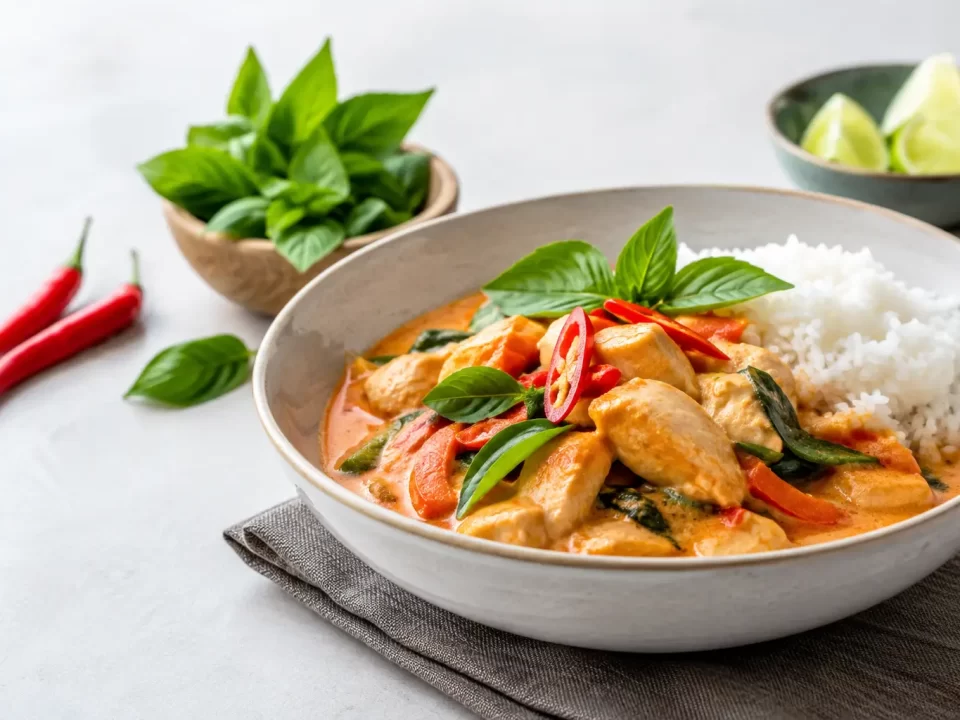
Pad Kra Pao offers a more direct, savory style of Thai cooking. Fragrant basil, a lively sauce, and hot rice create the kind of meal that feels deeply satisfying after a long day. It is a dependable choice for diners who know exactly what they want, while still carrying the bold character that makes Thai food memorable.
Rice is more than a side dish in Thai dining. It helps bring a table together, softens the heat of spicier dishes, and lets each person enjoy sauces and broths at their own pace. When ordering for a group, having enough rice on the table makes the entire meal more flexible.
Ask Questions That Help You Order With Confidence
Clear questions lead to a more relaxed meal. If halal considerations are central to your choice, ask the restaurant about its current halal documentation or status before you arrive, especially if you are ordering for a corporate event, celebration, or a large family group. Policies and menus can change, so a quick confirmation is more useful than relying on an old post or secondhand recommendation.
You can also ask about spice levels, allergens, and ingredients that matter to your group. This is particularly useful for catered meals, where one guest may need a mild option while another wants a dish with serious heat. Good Thai dining is not about forcing everyone into the same order. It is about creating a table where each person can eat comfortably and still enjoy the energy of the meal.
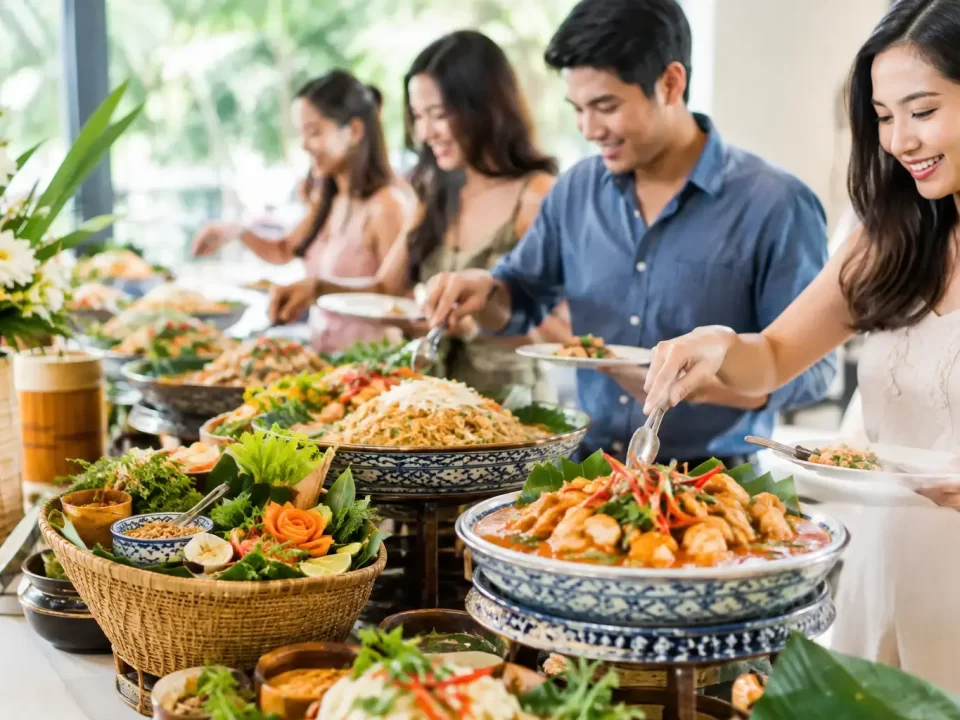
When reserving for a larger party, share the number of guests, timing, and whether the group prefers shared dishes or individual meals. A restaurant can then recommend a mix that makes sense rather than leaving one person to guess how much to order. This matters for office teams and family celebrations, where smooth planning makes the gathering feel more welcoming from the start.
Build a Better Table, Not Just a Bigger Order
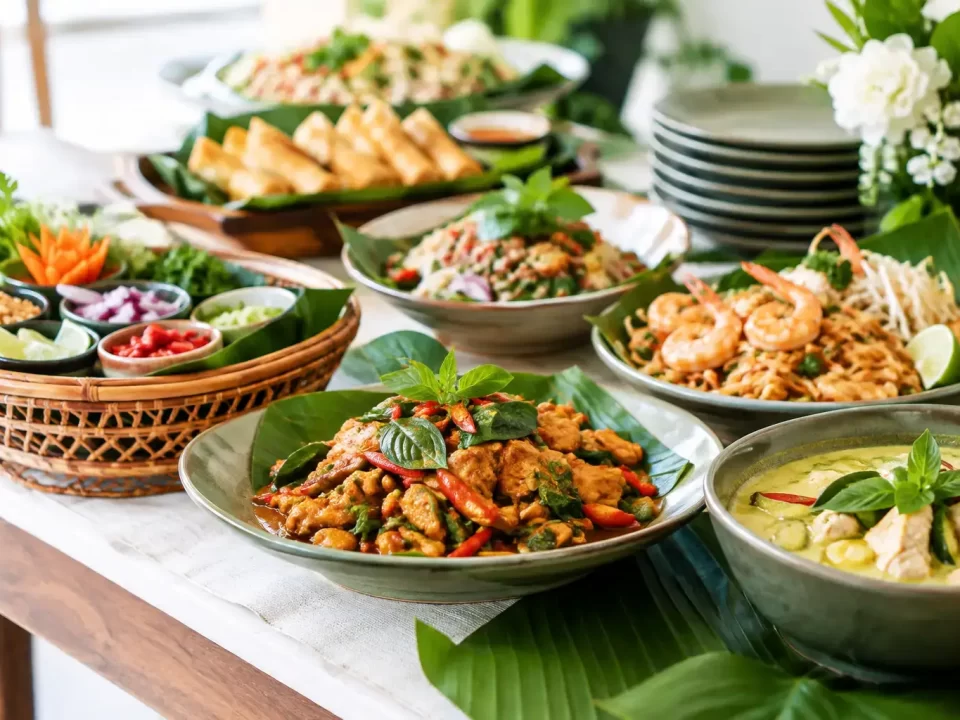
The easiest way to order Thai food for a group is to create variety across categories. One soup, one noodle dish, one basil-forward rice dish, one vegetable plate, and drinks is often a strong starting point for a small table. From there, adjust for the number of diners and how hungry everyone is.
For couples, it may be enough to share a soup and choose two mains with contrasting flavors. For families, familiar dishes and adjustable spice levels usually keep the meal relaxed. For friends, add more shareable plates and let the table become part of the fun. Thai food invites conversation because there is always another dish to pass, another flavor to compare, and another bite worth recommending.
Avoid ordering every dish at the same heat level or in the same style. A table made entirely of spicy stir-fries can feel one-dimensional, even when every individual dish tastes good. Balance is the better approach: combine a bright soup, a savory wok dish, a noodle favorite, and something cooling to drink.
Drinks and Dessert Matter More Than You Think
Thai milk tea has earned its place as a favorite for good reason. It is creamy, sweet, and refreshing alongside dishes with lively spices and herbs. For a casual lunch or dinner, it adds a familiar treat that makes the meal feel more complete.
Drinks also help make group dining more inclusive. Some guests may enjoy bold heat, while others may prefer a refreshing pause between bites. Offering a range of beverages keeps the table comfortable and lets the flavors of the food remain the focus.
For celebrations and catered occasions, think about the timing of drinks and dessert too. A well-planned spread should not peak with the first round of dishes and then fade. Ending with something sweet or a favorite Thai beverage gives guests a reason to linger, talk, and enjoy the moment.
Make Thai Dining Part of the Week
Thai food does not need to be saved for major occasions. Its mix of familiar favorites and shareable dishes makes it one of the easiest choices for midweek dinners, catch-ups after work, and relaxed family meals. The best neighborhood restaurants bring that feeling close to where people live, work, and gather.
At SOI 55 Thai Kitchen, the aim is to bring the heart of Thailand to the everyday table with authentic and modern Thai dishes made for casual meals, group gatherings, and flavorful celebrations. When the craving calls for fragrant soup, wok-fired noodles, basil-rich rice dishes, and a cold Thai milk tea, make room for a meal worth sharing.