Thai Takeaway Guide for Better Midweek Meals
November 5, 2026
Thai Event Menus That Make Groups Hungry
November 9, 2026
A bowl of Tom Yum arrives steaming, its citrusy aroma rising before the first spoonful. A plate of Pad Thai follows with savory noodles, crunchy peanuts, and a squeeze of lime. This is why thai cuisine feels so satisfying: it is built on contrast, with flavors that are bright yet comforting, fiery yet fresh, and bold enough to turn an ordinary Wednesday dinner into something worth gathering around for.
For many diners, Thai food is familiar through a handful of favorite dishes. But its appeal runs deeper than one spicy soup or a sweet, chilled Thai Milk Tea. Thai cooking brings together herbs, sauces, textures, and heat with a clear sense of balance. Every bite has a job to do, whether it adds fragrance, richness, acidity, sweetness, or crunch.
What Gives Thai Cuisine Its Signature Balance
Thai food is often described as a meeting point of sweet, sour, salty, spicy, and savory flavors. That description is true, but the real pleasure lies in how those elements support each other rather than compete. Lime can sharpen a rich broth. Palm sugar can soften the edge of chili. Fish sauce brings depth to fresh herbs, while tamarind gives noodles a tangy finish that keeps each forkful lively.
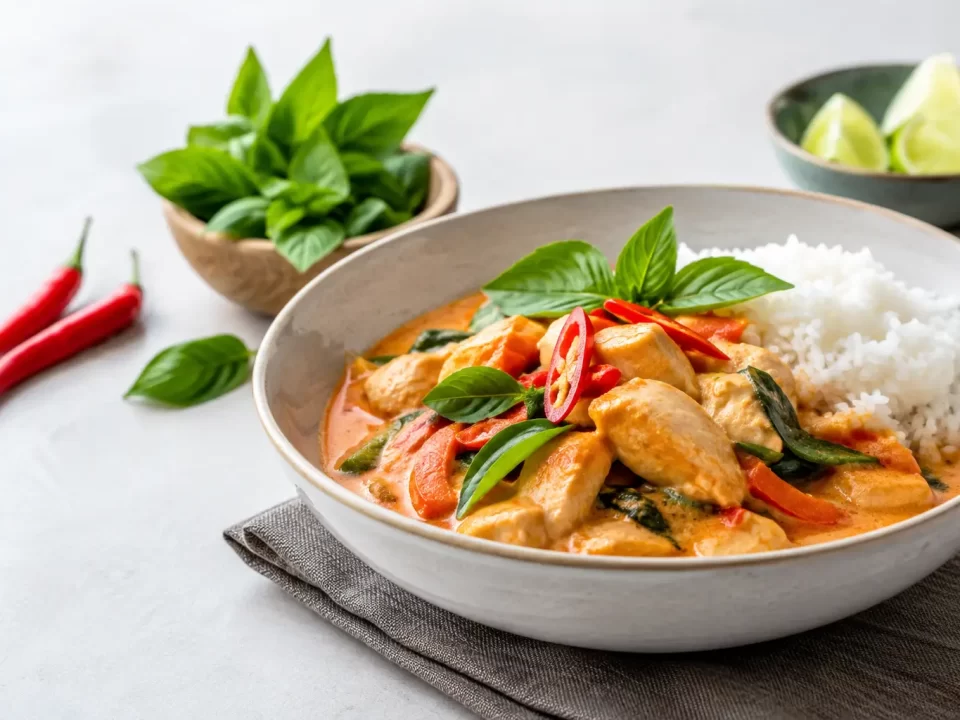
The ingredients are recognizable, but the combinations are what make them memorable. Lemongrass, galangal, kaffir lime leaves, basil, chili, garlic, and coconut milk each bring their own character. A dish may smell herbal first, taste savory in the middle, then leave a gentle warmth at the end. That layered experience makes Thai food easy to crave again.
Heat is part of the story, but it is not the whole story. Some guests want the full chili kick, while others prefer a milder dish with more room for fragrant herbs and savory sauces. Good Thai dining leaves room for both. The goal is flavor, not a contest of endurance.
Freshness Is Not Just a Garnish
In Thai cooking, fresh ingredients do more than decorate a plate. Herbs, lime, cucumber, and crisp vegetables reset the palate between richer bites. They make a creamy curry feel lighter and help grilled dishes feel even more satisfying.
That is one reason Thai meals work so well for sharing. One person can enjoy a spicy stir-fry, another can reach for a soothing curry, and the table can balance everything with rice, vegetables, and a cool drink. There is variety without losing the feeling that every dish belongs together.
Thai Cuisine Is Best Enjoyed Around the Table
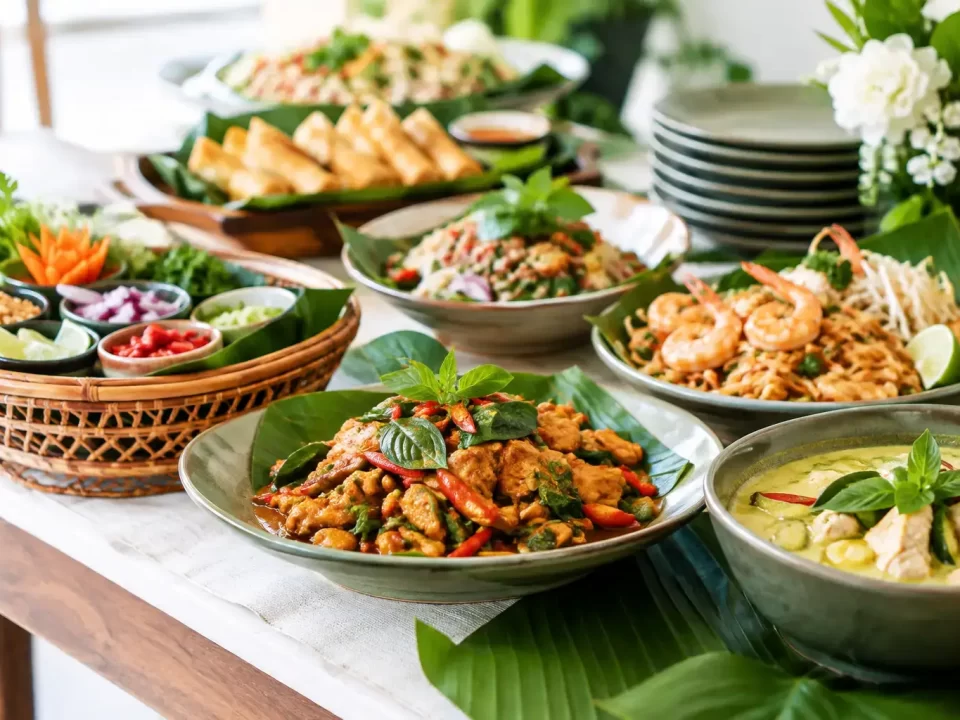
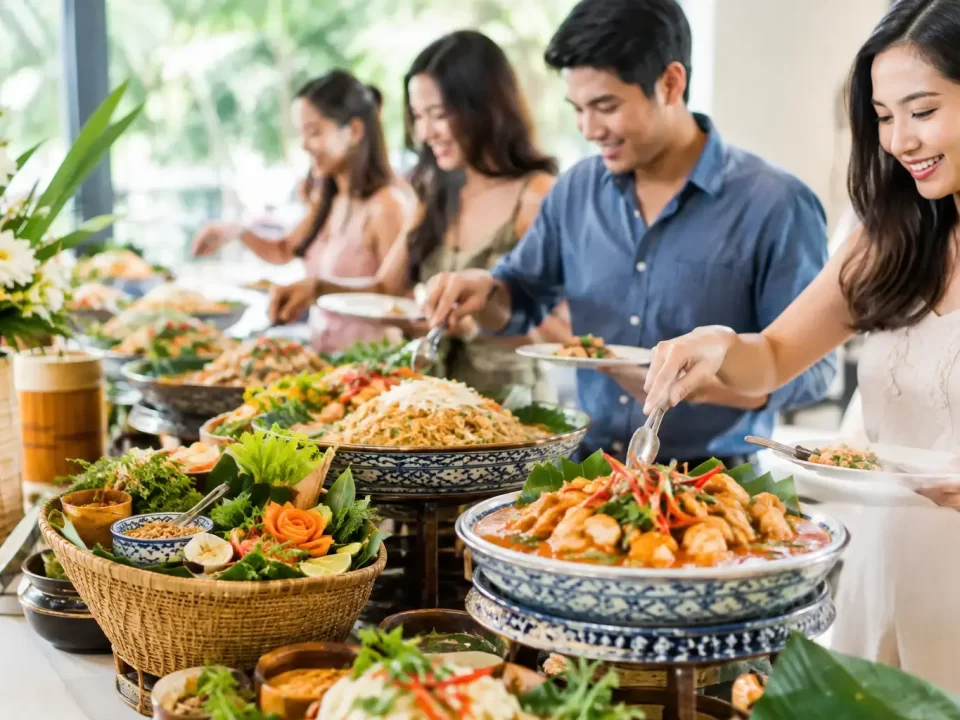
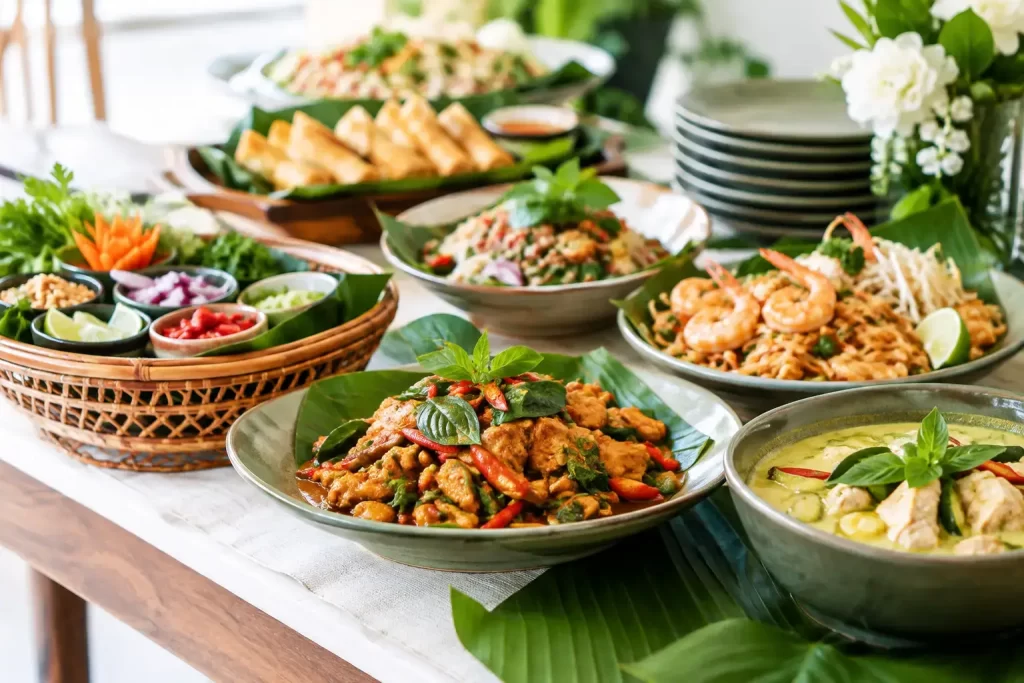
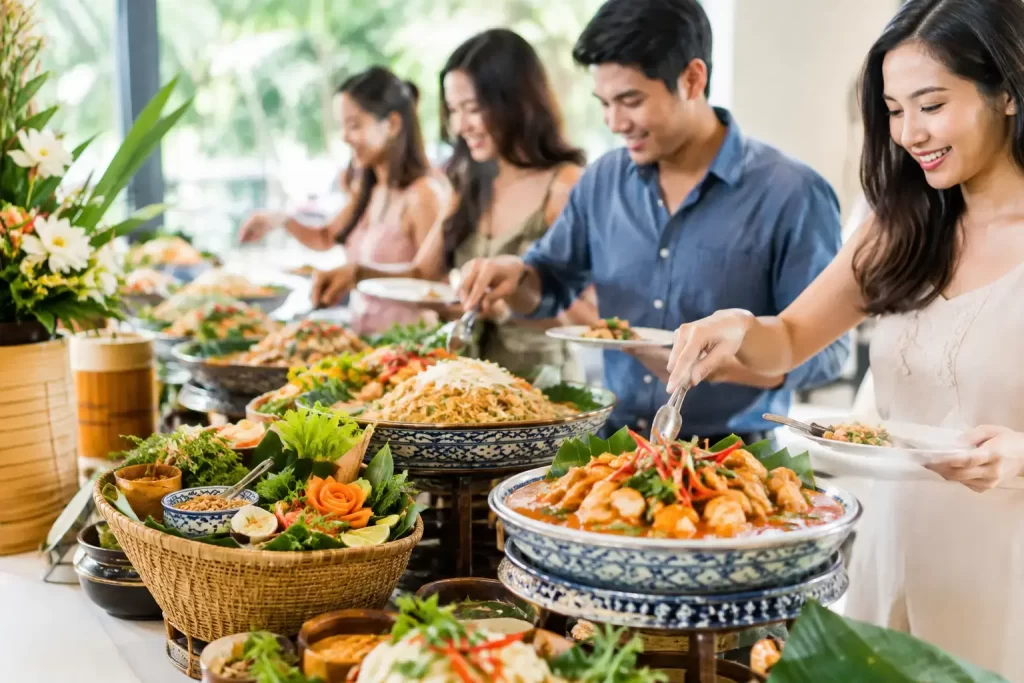
Thai meals have a naturally social rhythm. Instead of treating each plate as a separate experience, diners can order a few favorites and pass them around. The table becomes more interesting with every dish: a soup for its aromatic broth, a noodle dish for its satisfying chew, a stir-fry for its wok-fired savoriness, and a dessert or drink to cool things down.
Tom Yum Seafood is a perfect example of why shared dining works. Its hot-and-sour broth wakes up the appetite and gives the meal a lively starting point. Pad Kra Pao brings savory minced meat, basil, and chili to the table, often with the comfort of rice and a fried egg. Pad Thai offers a familiar balance of sweet, tangy, and nutty flavors that appeals across ages and appetites.
Then there is Thai Milk Tea, a favorite for good reason. Its creamy sweetness provides a welcome contrast to chili and citrus, while also feeling like a treat on its own. For lunch breaks, casual dinners, family weekends, or catch-ups with friends, these familiar dishes make the decision easy without making the meal feel routine.
Why Familiar Favorites Still Matter
A broad Thai menu should offer discovery, but it should also respect the dishes people return for. There is comfort in knowing that the Tom Yum will be fragrant, the Pad Thai will be satisfying, and the flavors will feel consistent from one visit to the next.
That consistency matters when Thai food becomes part of everyday dining instead of a once-in-a-while plan. Busy professionals need a dinner that feels more exciting than a rushed meal. Families need choices that suit different preferences. Groups want enough variety that everyone can find a favorite. Thai food answers all three needs when it is prepared with care and served in a welcoming setting.
The Difference Between Authenticity and Intimidation
Authentic Thai flavors do not need to feel unfamiliar or difficult to enjoy. A great Thai restaurant can stay true to the ingredients and techniques that give each dish its identity while creating an experience that feels relaxed and approachable.
That may mean introducing diners to a new curry through a favorite grilled dish, or pairing a spicy plate with something cooling and mild. It may mean offering a broad enough menu for adventurous eaters and careful eaters to dine together happily. Authenticity is not about making people prove how much heat they can handle. It is about serving food with a clear sense of where its flavor comes from.
Soi 55 Thai Kitchen brings that approach to neighborhood dining, with Bangkok-rooted culinary inspiration and modern Thai dishes made for the way people eat together in Malaysia. Whether the occasion is a quick midweek meal, a family gathering, or a larger office lunch, the best Thai dining feels generous, energetic, and easy to return to.
How to Build a Thai Meal Everyone Will Enjoy
The easiest way to order for a group is to think in contrasts. Start with a soup or appetizer that brings freshness and aroma. Add one noodle or rice-based dish for comfort, then choose a stir-fry or curry for depth. Finish the table with a cooling drink. This creates a meal with different textures and flavor levels, rather than several dishes that all taste similar.
For a smaller meal, balance matters just as much. Pad Kra Pao with rice can be a complete, deeply satisfying choice. Pad Thai works well when you want something tangy and familiar. Tom Yum Seafood is ideal when you are craving a broth with brightness and heat. If you enjoy stronger flavors, add chili gradually and let the dish reveal its layers before reaching for more.
There is no single correct order because the best choice depends on who is at the table. A family dinner may call for gentler dishes alongside one spicy favorite. A group of friends may want a bigger spread with several dishes to share. For corporate gatherings and celebrations, a customizable menu can make it easier to serve different tastes while keeping the meal lively and cohesive.
A Flavorful Reason to Make Dinner Plans
Thai food has staying power because it feels both comforting and exciting. The ingredients may be vibrant, the aromas may be unmistakable, and the chili may bring a little heat, but the experience is ultimately about pleasure: good food, full tables, and the easy conversation that happens when there is something delicious to pass around.
The next time dinner needs more than convenience, choose a Thai meal with contrast on the table. Let the herbs brighten the broth, let the wok-fired dishes bring the savoriness, and leave room for a sweet Thai Milk Tea at the end.