A Practical Guide to Thai Group Reservations
August 19, 2026
Thai Food for Corporate Meetings That Works
August 23, 2026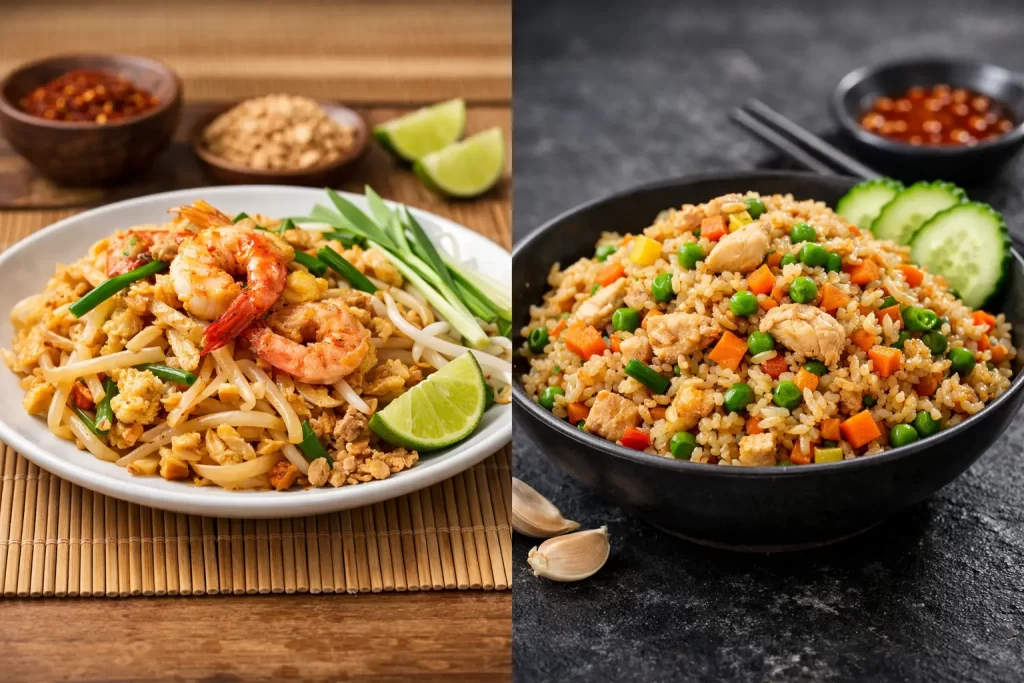
A great Thai meal often begins with one happy question: Pad Thai vs fried rice? Both arrive hot, satisfying, and full of the bold flavors people crave, but they offer two very different experiences. One is tangy, chewy, and nutty; the other is smoky, savory, and wonderfully comforting. The better choice is not about finding a single winner. It is about matching the dish to your mood, your appetite, and the rest of the table.
Pad Thai vs Fried Rice: The Big Difference
Pad Thai is built around rice noodles stir-fried over high heat with a carefully balanced sauce. Its character comes from the meeting of sweet, sour, salty, and savory notes, often lifted by lime and finished with crushed peanuts. Every forkful has contrast: soft noodles, fresh bean sprouts, a little chew, and that unmistakable tang that keeps you going back for another bite.
Fried rice starts from a different place. Cooked rice is tossed quickly in a hot wok with aromatics, vegetables, egg, seasonings, and your chosen protein. Rather than a bright tamarind-forward profile, it leans into savory wok flavor. The grains should stay separate and lightly toasted, carrying a subtle smokiness that makes even a simple plate feel deeply satisfying.
Think of Pad Thai as the lively, flavor-packed choice when you want a dish with personality in every bite. Fried rice is the dependable comfort choice when you want something warm, savory, and easy to share alongside other Thai favorites.
Why Pad Thai Has Such a Distinctive Flavor
The best Pad Thai is all about balance. Its sauce does not simply make the noodles wet or sweet. It gives the dish its identity. Tangy tamarind, savory seasoning, a hint of sweetness, and gentle heat work together so no one note takes over. A squeeze of lime at the table makes the flavors feel even brighter.
Texture matters just as much. Rice noodles have a tender but springy bite that absorbs sauce beautifully without becoming heavy. Bean sprouts bring freshness and crunch, while crushed peanuts add a roasted, nutty finish. This mix is why Pad Thai can feel exciting from the first bite to the last.
Pad Thai is especially satisfying when you are in the mood for a complete meal in one bowl or plate. It has richness, acidity, crunch, and freshness already built in. If you prefer food with a sweeter-tangier edge rather than a purely savory profile, it is likely the dish you will reach for.
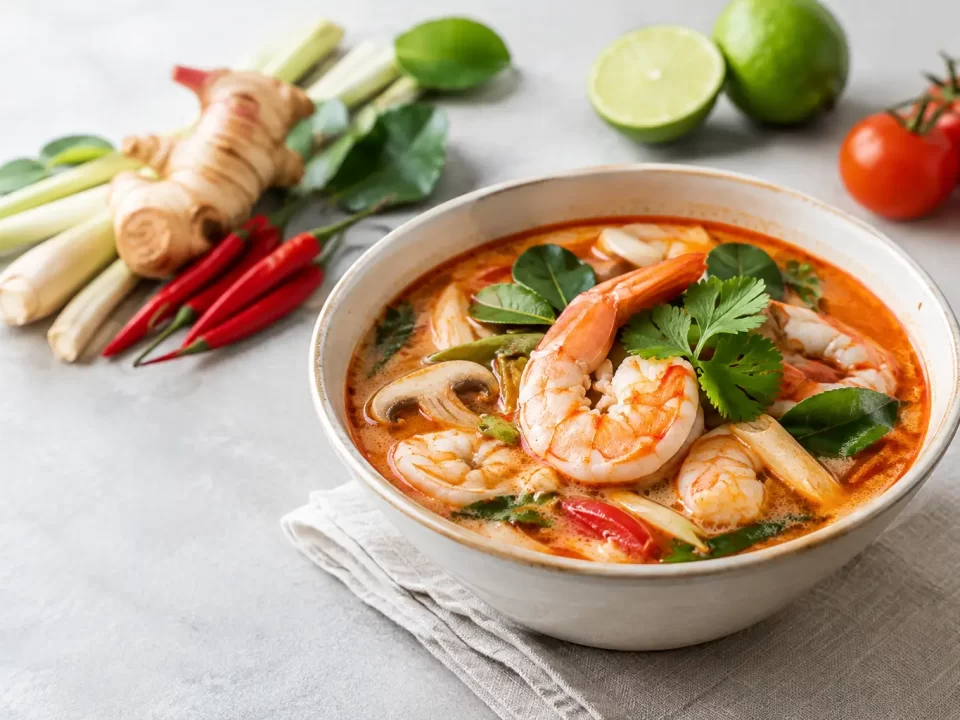
There is a trade-off, though. Because the flavor is so defined, Pad Thai may not be the best partner for every strongly seasoned dish on the table. If you are also ordering a fiery curry or a bold Tom Yum Seafood, you may want to share the noodles rather than make them your only main event.
Choose Pad Thai when you want brightness
Pad Thai suits lunch breaks, casual dinner dates, and any meal when you want something familiar but never dull. It is also a smart choice for diners who enjoy contrast: tangy sauce against savory protein, soft noodles against crisp sprouts, and rich wok flavor refreshed by lime.
For a group meal, Pad Thai can be the crowd-pleasing noodle dish that gives everyone something to reach for between spoonfuls of curry and grilled favorites. It feels festive without being fussy.
What Makes Thai Fried Rice So Comforting
Thai fried rice may look straightforward, but good fried rice depends on timing, heat, and restraint. The rice needs to be dry enough to fry properly, and each grain should pick up flavor without turning soft or clumped together. A hot wok gives it that lightly charred aroma that makes the dish instantly inviting.
Its flavor profile is usually more savory and rounded than Pad Thai. Garlic, onion, egg, vegetables, and seasoning build a comforting foundation, while fresh cucumber, tomato, or lime can add a clean contrast on the side. The result is hearty without necessarily feeling as sauce-forward as noodles.
Fried rice is also remarkably adaptable. It can work as a quick solo meal, a side to share with several dishes, or a reliable option for diners who prefer familiar rice-based comfort. When a table includes different spice preferences, it is often one of the easiest dishes for everyone to enjoy.
The trade-off is that fried rice is more subtle. If you are craving pronounced tang, roasted peanut, and a lively sauce, it may feel less dramatic than Pad Thai. But that subtlety is also its strength. Fried rice gives strong dishes around it room to shine.
Choose fried rice when you want savory comfort
Order fried rice when you want a satisfying meal that feels easy, warm, and familiar. It is particularly good alongside dishes with broth, sauce, or spice because the rice helps bring the whole table together. A spoonful of fried rice after a spicy bite of Tom Yum can be exactly what resets your palate.
It is also a natural choice for family meals and office lunches. The flavor is approachable, the portion is filling, and it works well when shared with several mains. For diners who always feel most satisfied after a good rice dish, there is no need to overthink it.
Pad Thai vs Fried Rice for Different Appetites
If your decision comes down to hunger, consider how you want to feel after the meal. Pad Thai can feel more indulgent because of its sauce, noodles, peanuts, and layered toppings. It is ideal when you want your main dish to be the center of attention.
Fried rice tends to feel more versatile. It can be a complete meal, but it also plays well with other dishes. If the plan is to order a spread for friends or family, fried rice is often the better anchor. It gives everyone a familiar base while the curries, seafood dishes, and spicy stir-fries bring the excitement.
Your preferred texture matters, too. Choose Pad Thai if you love soft, chewy noodles with crunchy toppings and a glossy sauce. Choose fried rice if you enjoy distinct grains, a light wok char, and savory bites that are less sweet and less tangy.
For spice lovers, either dish can fit the table, but they do it differently. Pad Thai’s sweet-sour notes can soften the impact of spicy dishes served alongside it. Fried rice offers a mellow, savory counterpoint that lets you enjoy a hotter main without overwhelming your taste buds.
The Best Choice for a Thai Group Meal
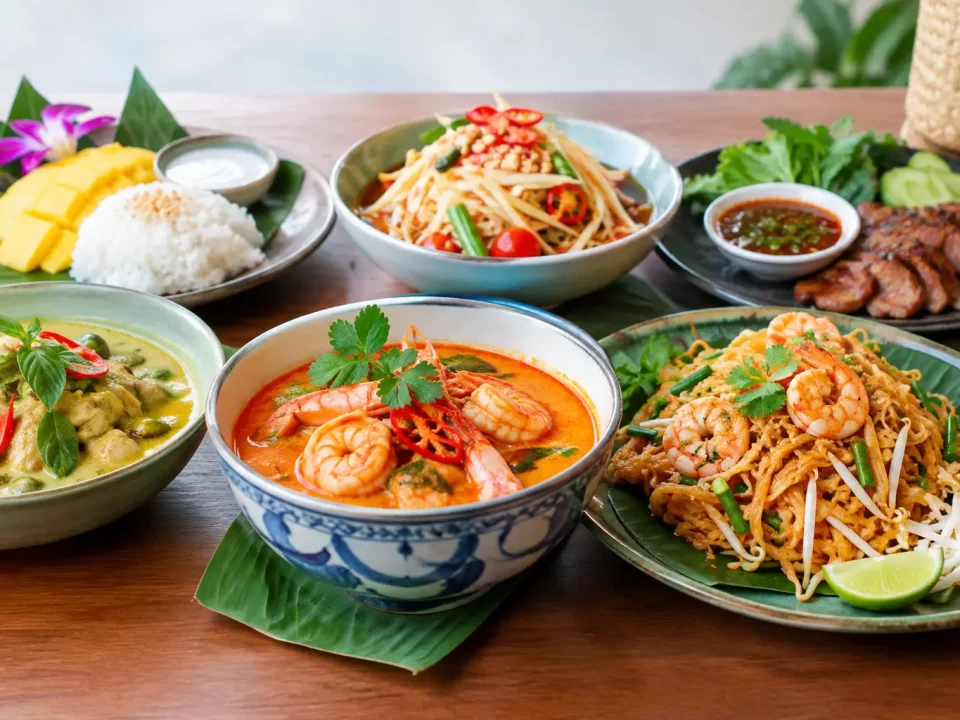
There is no rule saying you must order one or the other. In fact, the most enjoyable Thai tables often include both. Pad Thai brings noodles, color, and tangy energy. Fried rice brings comfort, shareability, and a savory foundation. Together, they make a spread feel generous and complete.
For a group of four or more, consider ordering Pad Thai for the noodle lovers and fried rice as the shared staple, then add a soup or spicy main for contrast. This creates a meal with different textures and flavor levels instead of several dishes that all taste similar.
At Soi 55, this is the kind of table made for conversation: steaming dishes in the center, bold aromas in the air, and enough variety for everyone to find a favorite. Whether it is a casual catch-up, a family dinner, or a team gathering, sharing gives you the freedom to enjoy both without choosing sides.
So, Which One Should You Order?
Order Pad Thai when you want a bright, tangy noodle dish with roasted peanut flavor and plenty of texture. Order fried rice when you want savory wok comfort, a shareable base for other dishes, or a familiar plate that satisfies every time.
Better yet, let the occasion decide. A quiet lunch might call for a plate of Pad Thai and a squeeze of lime. A lively dinner with friends may call for fried rice in the middle of the table, surrounded by dishes made for passing around. The best Thai meal is the one that leaves everyone reaching back for one more bite.