Thai Private Event Guide for Flavorful Gatherings
October 30, 2026
Thai Halal Dining Guide for Bold Everyday Meals
November 3, 2026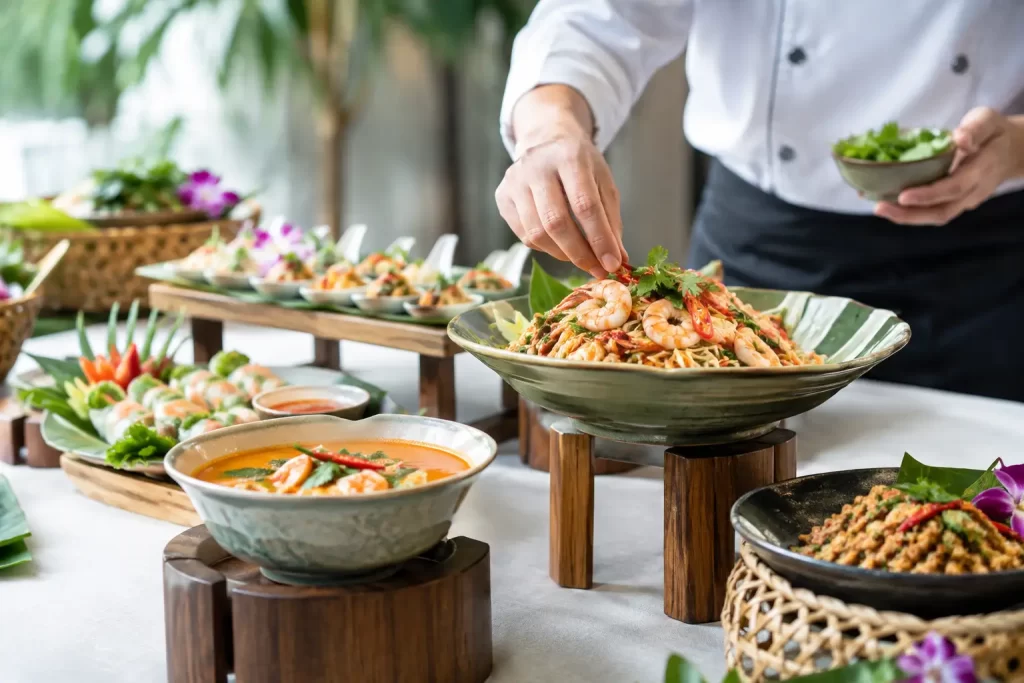
A catering table can look generous and still miss the moment. The difference is not simply how much food is served, but whether it feels right for the people in the room. Knowing how to customize event catering means building a menu around your guests, your occasion, and the kind of gathering you want them to remember – from a lively office lunch to a family celebration filled with bold, delicious Thai flavors.
Thai food is especially suited to shared events because it brings contrast to the table: bright herbs, rich curries, comforting noodles, tangy soups, and sweet drinks that make every plate feel more exciting. The best custom catering does not try to serve everything. It chooses the right mix, gives guests variety, and makes hosting feel easy.
Start With the Occasion, Not Just the Menu
Before selecting dishes, think about what your event needs the food to do. A working lunch calls for quick, satisfying dishes that are easy to serve and eat. A birthday dinner can be more generous and social, with shared platters that invite everyone to try a little of everything. A corporate appreciation event may need a polished presentation, clear serving flow, and broad choices for a mixed group.
Guest count matters, but timing matters too. A midday event often works best with familiar favorites and balanced portions, while an evening gathering gives you more room for richer curries, seafood dishes, and a wider spread of sides. If guests will be standing, prioritize food that is simple to portion and enjoy without slowing down the conversation.
It also helps to decide whether catering is the main experience or part of a larger program. If there are speeches, games, or presentations, avoid a menu that requires everyone to stop and sit at once. A buffet or shared-table format gives guests more flexibility. For a smaller private gathering, a paced meal with dishes arriving in stages can feel warmer and more personal.
How to Customize Event Catering Around Your Guests
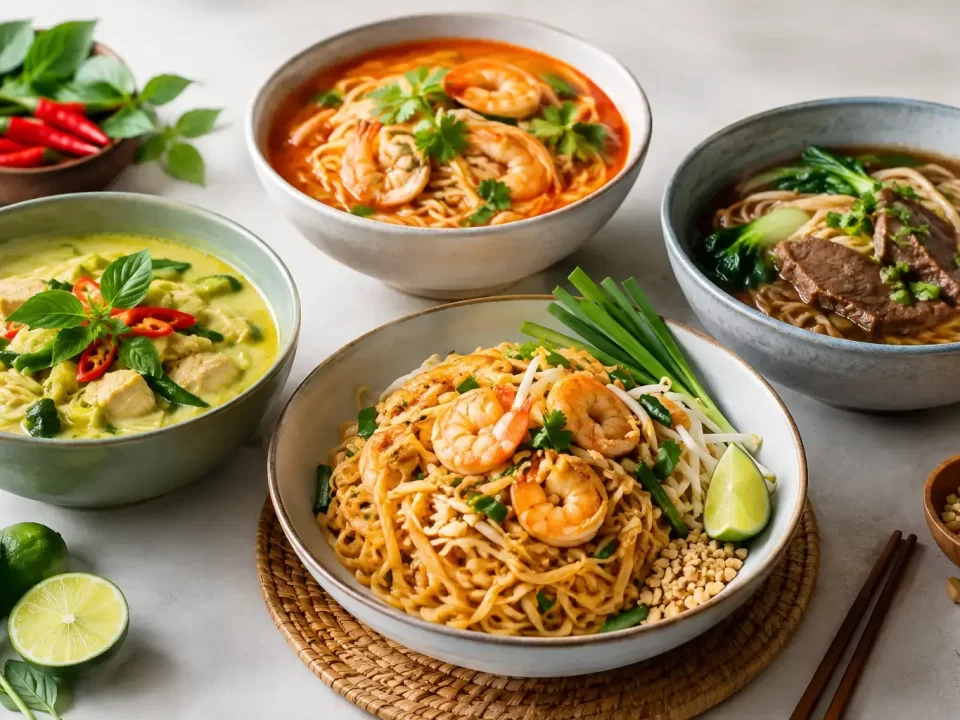
A strong menu gives familiar comfort while leaving room for discovery. Start with Thai dishes that most guests recognize, such as Pad Thai, Tom Yum Seafood, Pad Kra Pao, and Thai Milk Tea. These favorites create an easy entry point for guests who already love Thai food and those trying it in a group setting for the first time.
Then add a few dishes that create range. A fragrant curry adds depth, a stir-fried vegetable dish brings freshness, and a crisp appetizer gives the table texture before the mains arrive. This combination keeps the meal from feeling one-note, especially when guests are serving themselves across several rounds.
Customization should also account for different appetites and preferences. Ask early if there are vegetarian guests, ingredient sensitivities, children, or guests who prefer milder flavors. Thai cuisine can be full of character without making every dish intensely spicy. A thoughtful caterer can balance milder crowd-pleasers with bolder options, so everyone finds something they enjoy.
The goal is not to create separate meals for every person. It is to create a menu with enough choice that no guest feels overlooked. For most events, a balanced spread of proteins, vegetables, rice or noodles, and a few shareable starters is more useful than a long list of similar dishes.
Build Contrast Into Every Course
Great Thai catering is built on balance. If your menu includes a creamy curry, pair it with something bright and citrusy. If noodles are one of the main attractions, include rice for guests who prefer a different base. If there are several savory dishes, finish with Thai Milk Tea or a light dessert to give the meal a satisfying close.
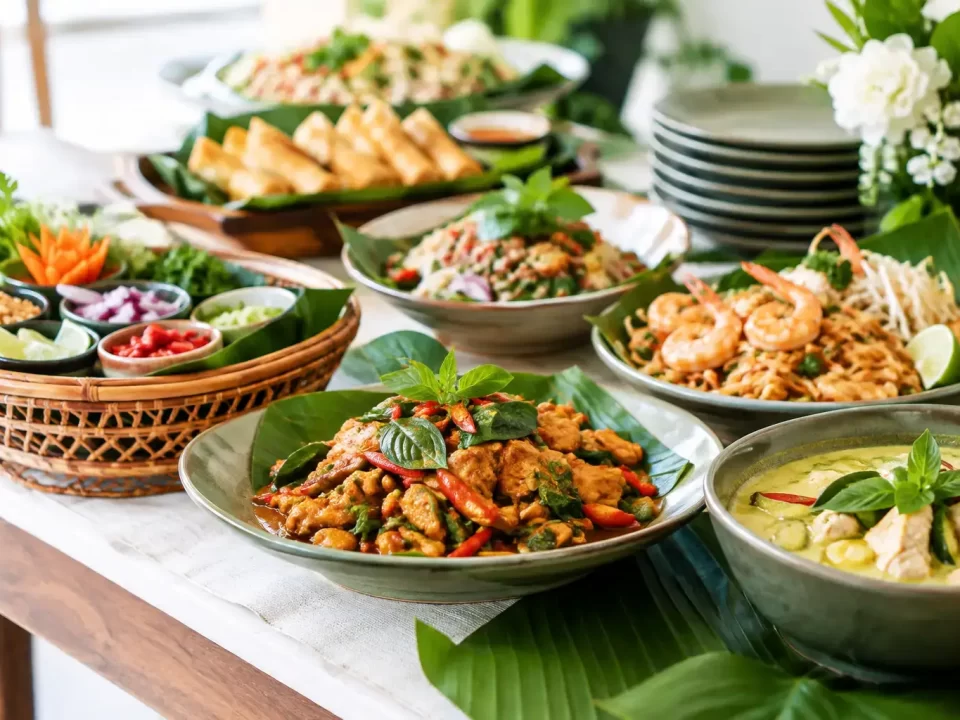
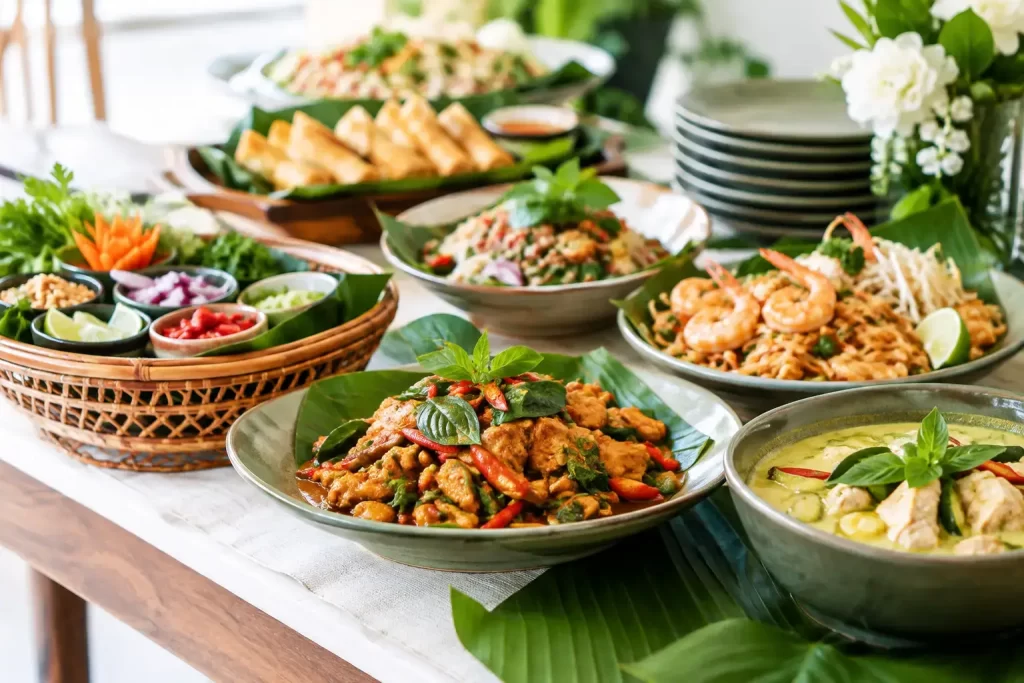
Think about color, too. A table with golden fried bites, fresh greens, deep curry sauces, and vibrant garnishes feels celebratory before anyone takes a bite. Presentation does not need to be overly formal to make an impact. It simply needs to look cared for and easy to enjoy.
Choose a Serving Style That Fits the Room
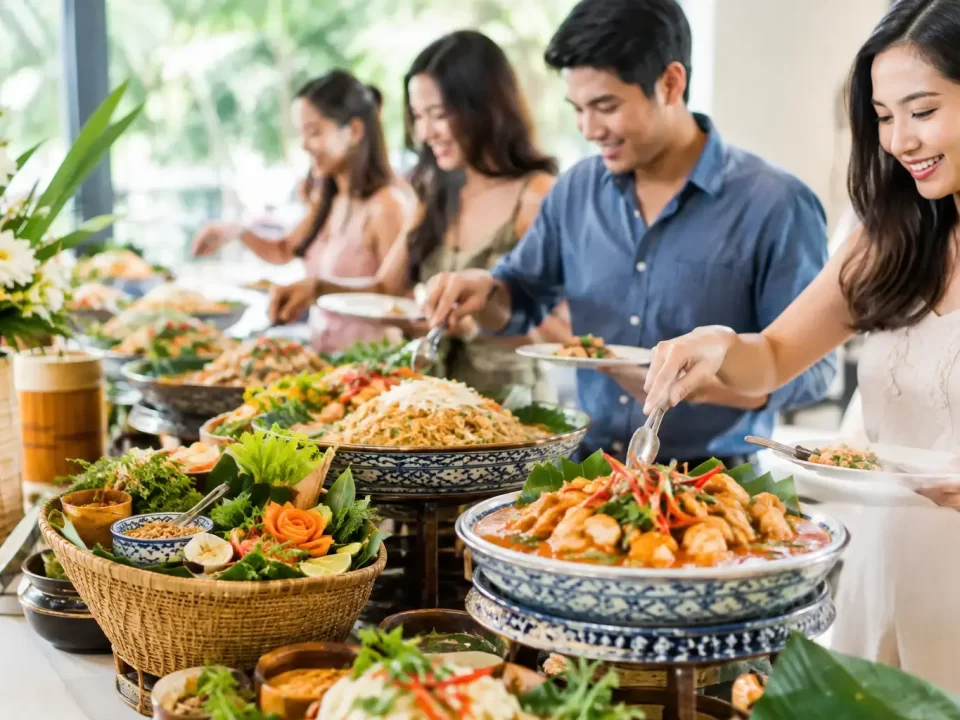
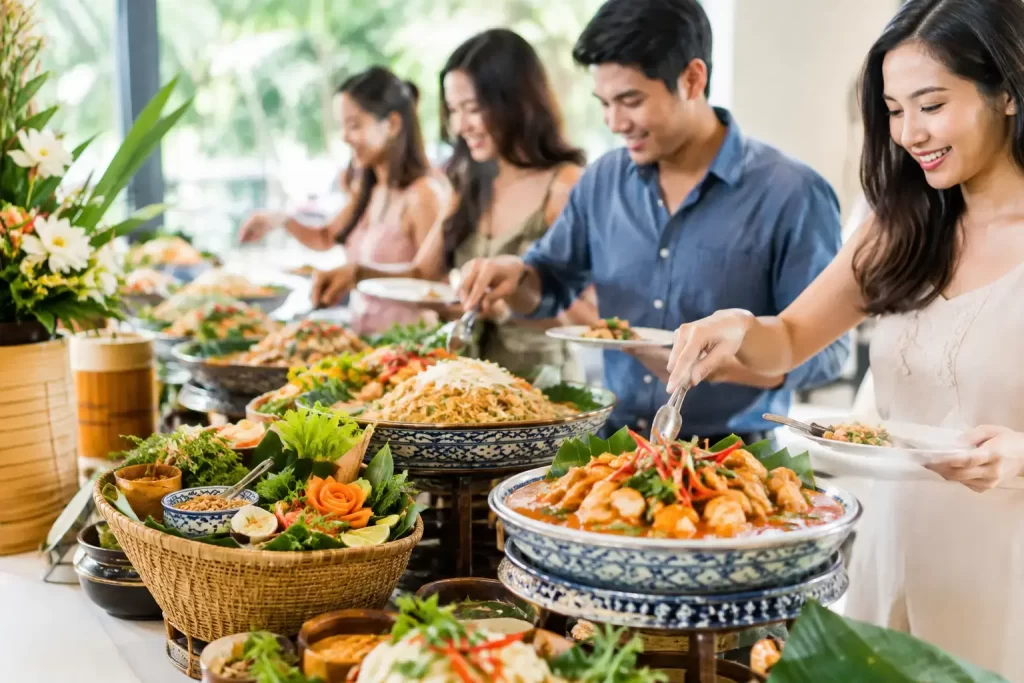
The way food is served shapes the whole event. Buffet catering is often the practical choice for larger groups because guests can choose what they like and return for more. It works well for office functions, community gatherings, and celebrations where people arrive at different times.
Shared platters are ideal for smaller groups that want the energy of a Thai restaurant meal. Dishes placed in the center encourage conversation, tasting, and passing food around the table. This format works particularly well for family reunions, team dinners, and casual celebrations where the meal itself is part of the fun.
Individual portions can make sense for meetings with limited time or a set seating plan. They offer clear portions and a tidy setup, though they provide less flexibility than a buffet. The right choice depends on your venue, event schedule, and how much interaction you want around the food.
Do not forget practical details. Confirm whether your venue has tables for food service, access to power if needed, space for guests to line up, and a plan for keeping dishes at their best throughout the meal. A menu can be excellent on paper but feel rushed if the setup does not match the room.
Plan Portions With Generosity and Purpose
Ordering too little food is an obvious problem, but ordering without a plan can create unnecessary waste. The right quantity depends on your guest list, serving time, and event format. Lunch crowds may prefer lighter portions, while dinner gatherings often call for fuller mains and more variety. A group of young professionals after work may have a different appetite from a daytime family event.
If the meal is the event’s centerpiece, allow for a broader selection and enough rice or noodles to support the mains. If catering is served alongside other activities, snacks, or desserts, you can focus on a tighter menu with well-chosen portions. Drinks deserve the same consideration. A chilled Thai Milk Tea can be a memorable addition for a celebratory meal, especially when paired with spicy or savory dishes.
When discussing quantities, share the real details with your caterer: the number of adults and children, whether guests will have eaten beforehand, the event duration, and whether there are other food vendors. Those answers lead to better recommendations than guest count alone.
Add Personal Touches Without Overcomplicating It
Customization is not always about adding more dishes. Sometimes the smallest details make an event feel specially planned. You might select a signature curry because it is the host’s favorite, choose a noodle dish that suits an office lunch, or include Thai drinks to give a birthday table more personality.
For corporate events, consider how the menu reflects the mood you want to create. A casual team lunch can be playful and abundant, while a client gathering may call for a more curated spread with clear dish labels and a refined serving arrangement. For family occasions, favorite dishes across generations often matter more than elaborate trends.
At SOI 55 Thai Kitchen, custom catering can bring the heart of Thailand to group occasions with recognizable favorites and modern Thai dishes designed for sharing. The most successful menus feel generous, approachable, and full of flavor rather than overly complicated.
Ask These Questions Before Confirming
A useful catering conversation should cover more than the menu price. Ask how dishes will be packed and served, how long they will stay at their best, whether labels can be included, and what information is needed for dietary requests. Confirm delivery timing, setup expectations, serving utensils, and who will be the on-site contact.
It is also wise to ask what can realistically be customized. Some changes improve the experience, while too many last-minute adjustments can affect consistency and timing. A good caterer will be clear about what works best for the group and offer alternatives when a request does not suit the event format.
Make the Food Part of the Welcome
The most memorable catered events make guests feel considered from the first glance at the table. A well-chosen Thai spread does more than fill plates. It gives colleagues a reason to take a proper break, brings families together over shared favorites, and turns an ordinary gathering into something warmer.
Choose dishes with confidence, leave room for different tastes, and give your caterer enough context to plan well. When the menu reflects the people around the table, every serving feels like a welcome.