How to Choose Tom Yum Soup for the Table
September 12, 2026
Thai Food vs Chinese Food: Key Differences
September 16, 2026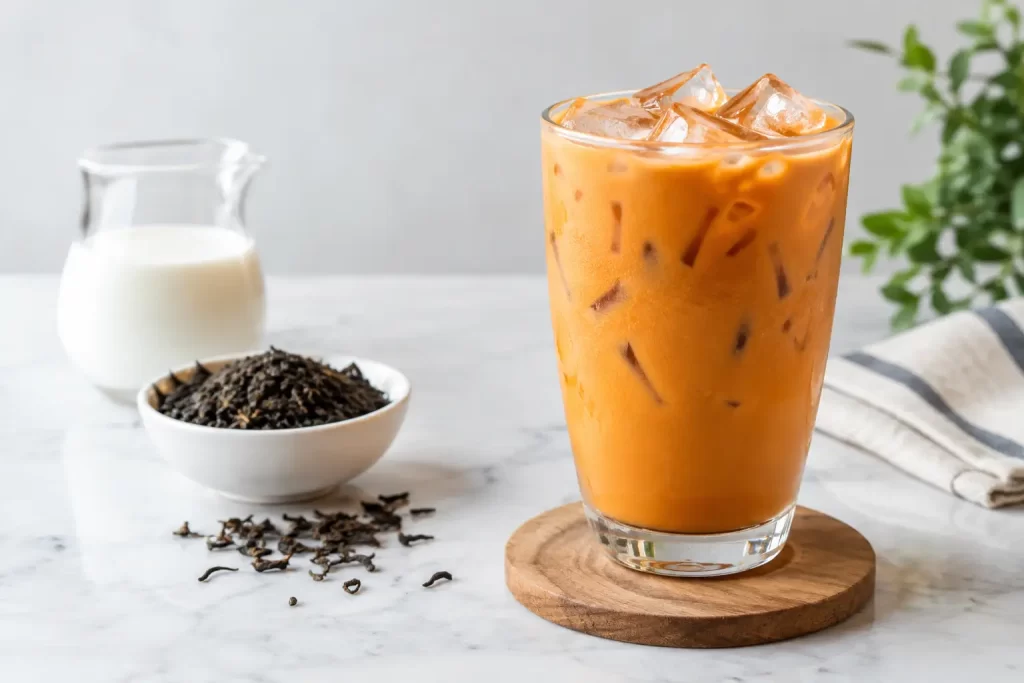
A tall glass of Thai milk tea can look like pure refreshment: amber tea, plenty of ice, and that creamy sweetness that balances a spicy meal beautifully. But if you are deciding between Thai tea and another afternoon coffee, Thai tea caffeine is worth considering. It is usually gentler than coffee, yet it is not caffeine-free.
The exact amount depends on the tea blend, how long it is brewed, and the portion in your glass. That means two Thai teas can taste equally rich and creamy while delivering noticeably different levels of caffeine. Here is what to expect, plus how to enjoy this Thai favorite in a way that suits your day.
How Much Caffeine Is in Thai Tea?
A typical serving of Thai tea often contains around 20 to 60 milligrams of caffeine. For perspective, an 8-ounce cup of brewed black tea commonly falls within a similar range, while an 8-ounce cup of brewed coffee may contain roughly 80 to 100 milligrams or more.
Thai tea is traditionally made with a strongly brewed black tea base, often combined with warming spices and aromatic ingredients. The tea is then sweetened and finished with milk or a creamy topping. The milk, ice, and sweetness create the signature smooth taste, but they do not remove the caffeine already present in the brewed tea.
A restaurant-sized iced Thai milk tea may contain more than a standard home teacup simply because the tea is brewed concentrated before ice and milk are added. On the other hand, a heavily iced drink with a smaller amount of tea may have less caffeine than expected. There is no single number that applies to every recipe.
Why the Amount Can Change
The biggest factor is the type and amount of tea used. A blend with more black tea leaves generally contains more caffeine than one made with less tea or a lighter brew. Steeping time matters too. A longer, stronger brew typically extracts more caffeine and produces a deeper, more robust tea flavor.
Serving size also changes the answer. A small glass enjoyed with lunch is different from a large iced drink sipped through a long office afternoon. If caffeine is a personal concern, portion size is often the easiest factor to manage without giving up the drink entirely.
Thai Tea Caffeine Compared With Other Drinks
Thai tea is a middle-ground choice for many people. It has more caffeine than most herbal drinks, but usually less than coffee, cold brew, energy drinks, or a double espresso. That can make it a pleasant option when you want a little lift without the sharper buzz some people get from coffee.
Compared with green tea, the result can vary. Green tea often has lower caffeine than black tea, though brewing method and leaf quantity still matter. Compared with regular black tea, Thai tea may be similar in caffeine per amount of brewed tea, but its final strength depends on how it is prepared and diluted over ice.
The bigger difference is the experience. Coffee is often chosen for a fast, direct caffeine hit. Thai milk tea is usually part of a meal, a catch-up with friends, or a cooling break after bold Thai flavors. Its sweetness and creaminess slow the experience down, even if the tea itself still offers a gentle pick-me-up.
Does Thai Milk Tea Keep You Awake?
It depends on your caffeine sensitivity, the size of the serving, and the time you drink it. For someone who drinks coffee every day, a Thai tea after lunch may feel mild. For someone who rarely has caffeinated drinks, the same glass could be enough to affect sleep if enjoyed late in the evening.
Caffeine can stay in the body for hours, so timing is more useful than guessing whether Thai tea is “strong” or “weak.” If you know caffeine affects your sleep, enjoying Thai milk tea with lunch or an early dinner is often a better choice than ordering it after a late-night meal.
Keep sweetness in mind as well. Thai tea is loved for its rich, sweet profile, but a sweet drink can feel especially energizing in the moment. That feeling is not only from caffeine. If you are trying to limit added sugar while still enjoying Thai tea, ask whether a less-sweet preparation is available. The flavor may be more tea-forward, with the spices and roasted notes coming through more clearly.
What Is Actually in Traditional Thai Tea?
The familiar orange color of Thai tea can come from the tea blend and, in some preparations, added coloring. Its memorable taste is built around black tea and aromatic notes that may include star anise, vanilla, tamarind, or other spices depending on the recipe. Every kitchen has its own balance.
The drink is typically served over ice with sweetened milk, evaporated milk, condensed milk, or a combination of creamy ingredients. This creates the layered look and velvety finish diners expect. It also explains why Thai tea feels more indulgent than a plain cup of tea.
That indulgence is part of the appeal, especially beside dishes with bright lime, chili, basil, and fragrant herbs. A cold Thai milk tea can soften the heat of a spicy meal and bring a comforting sweetness between bites. At Soi 55, it belongs naturally alongside the bold and delicious tastes that make Thai dining a lively shared-table experience.
Choosing Thai Tea When You Watch Caffeine
You do not have to avoid Thai tea just because you are mindful of caffeine. A few practical choices can make the drink easier to fit into your routine.
Choose a smaller serving if you want the flavor without as much tea. Have it earlier in the day if you are sensitive to caffeine at night. Pair it with food rather than drinking it on an empty stomach, especially if caffeine tends to make you feel shaky. And if you are pregnant, managing a health condition, or following medical advice about caffeine, use your personal daily limit as the guide rather than relying on a general estimate.
It is also reasonable to ask how a restaurant prepares its Thai tea. Some recipes use a strong brewed concentrate, while others use a lighter blend. Staff may not have an exact milligram count, but they can often explain whether the drink is tea-based, how it is brewed, and whether sweetness can be adjusted.
Can You Order Thai Tea Without Caffeine?
A standard Thai tea made with black tea is not decaffeinated. Adding milk does not make it caffeine-free, and choosing a less-sweet version changes the sugar level rather than the caffeine level.
If you need to avoid caffeine completely, consider a non-tea alternative instead, such as a fruit-based drink or another caffeine-free option on the menu. If you only want less caffeine, a smaller portion or an earlier serving time may be enough.
The Best Time to Enjoy Thai Tea
Thai tea shines when it has a role in the meal. It is a natural match for a weekday lunch, a relaxed weekend family table, or a meal with friends where spicy dishes keep arriving and everyone wants something cold and sweet to share alongside the food.
For the most comfortable experience, treat it as a flavorful iced tea rather than a replacement for water. Enjoy the creaminess, then keep water on the table too, particularly when your meal includes plenty of spice. That simple balance lets Thai tea stay what it is meant to be: a satisfying, aromatic treat that brings a little extra joy to a great Thai meal.
The next time you order a glass, let your schedule guide the choice. If you want a gentle afternoon lift and a sweet companion for bold Thai flavors, Thai tea can be exactly the right pour.