Thai Spice Control: Order Heat With Confidence
September 22, 2026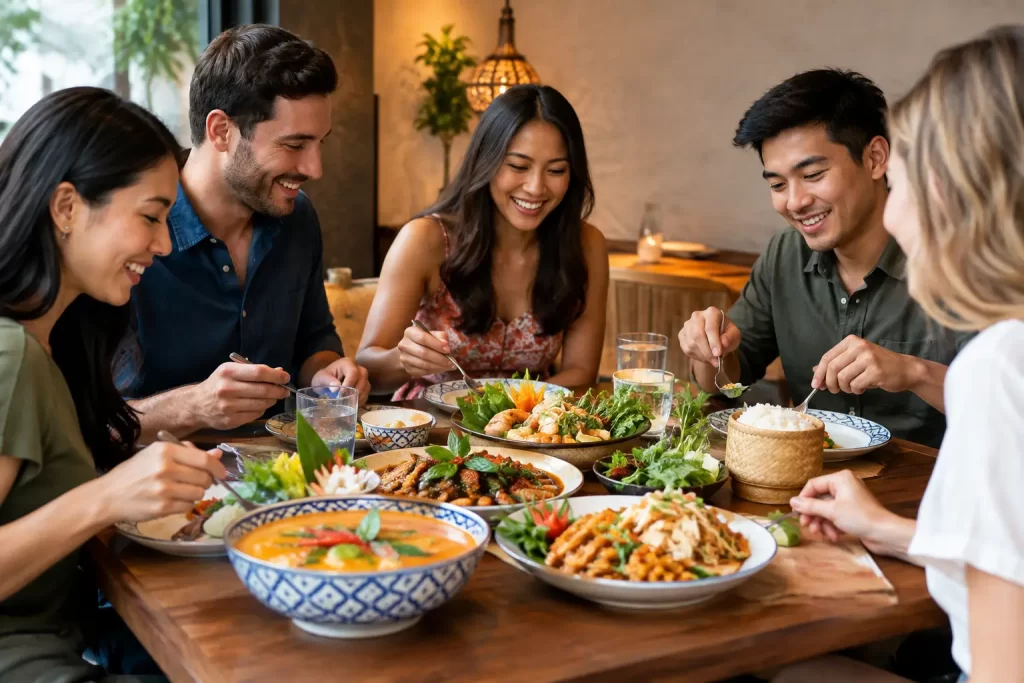
A great group meal should begin with anticipation, not a long message thread full of “where are we eating?” questions. This group dinner booking guide makes it easier to arrange a flavorful Thai gathering that feels relaxed from the first arrival to the final round of Thai milk tea. Whether it is a midweek office catch-up, a family birthday, or a long-overdue dinner with friends, a little planning helps everyone enjoy more of the table.
Start Your Group Dinner Booking Early
The best time to book depends on the size and purpose of your gathering. A dinner for six friends on a regular Wednesday may only need a few days’ notice, while a team dinner, weekend celebration, or group of 12 or more should be arranged earlier. Early booking gives the restaurant a better chance to prepare a suitable table setup and helps you secure your preferred dining time.
Before making the reservation, confirm a realistic headcount. It is normal for one or two people to be undecided, but providing a firm number helps the team prepare comfortably. If the group size changes, let the restaurant know as soon as possible. A table planned for eight can feel very different when 14 guests arrive.
Also think about the pace of the evening. A quick office meal may suit an earlier reservation, while a birthday group might prefer a later time with room to settle in, share desserts, and take photos. Booking with the occasion in mind makes the experience feel more personal without making it complicated.
What to Share When You Make a Reservation
A booking is more useful when it includes more than a name and time. Let the restaurant know the number of adults and children, the date, your preferred seating time, and whether the gathering has a special purpose. A birthday, farewell dinner, client meal, or family reunion may call for a different table arrangement or service pace.
Dietary requirements matter too. Thai food is known for layers of flavor, from bright herbs and tangy notes to rich curries and spicy stir-fries. Sharing any allergies or dietary preferences ahead of time gives the restaurant time to guide your group toward suitable choices. Do not assume every dish can be adjusted in the same way. Ask clearly, and keep the request practical.
If you are coordinating for an office or a large family, nominate one contact person. This avoids mixed messages and gives the restaurant a clear person to reach if there is a question about the booking, guest count, or menu plans.
Choose a Time That Matches Your Group
Busy periods can bring a lively atmosphere, which is ideal for friends who enjoy the energy of a full dining room. On the other hand, an earlier dinner or midweek gathering may be better for groups that want easier conversation, especially if you are hosting colleagues, older family members, or young children.
For teams looking for a flavorful break in the middle of the week, Wednesday can be an especially good choice. It gives everyone something to look forward to before the weekend, without competing with the busiest social dining nights.
Plan a Thai Menu Made for Sharing
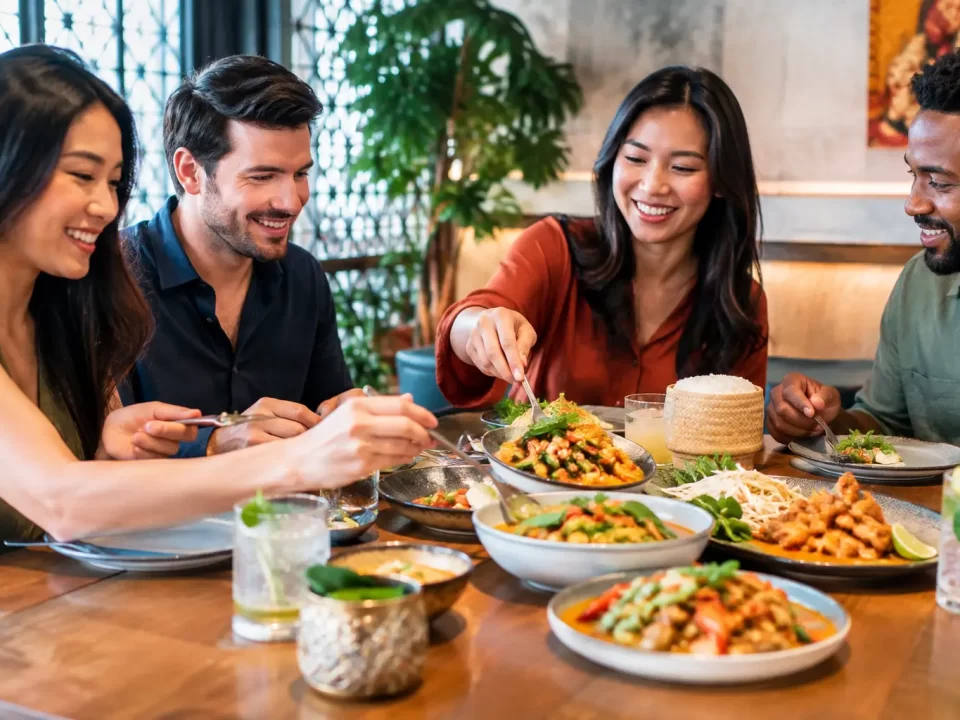
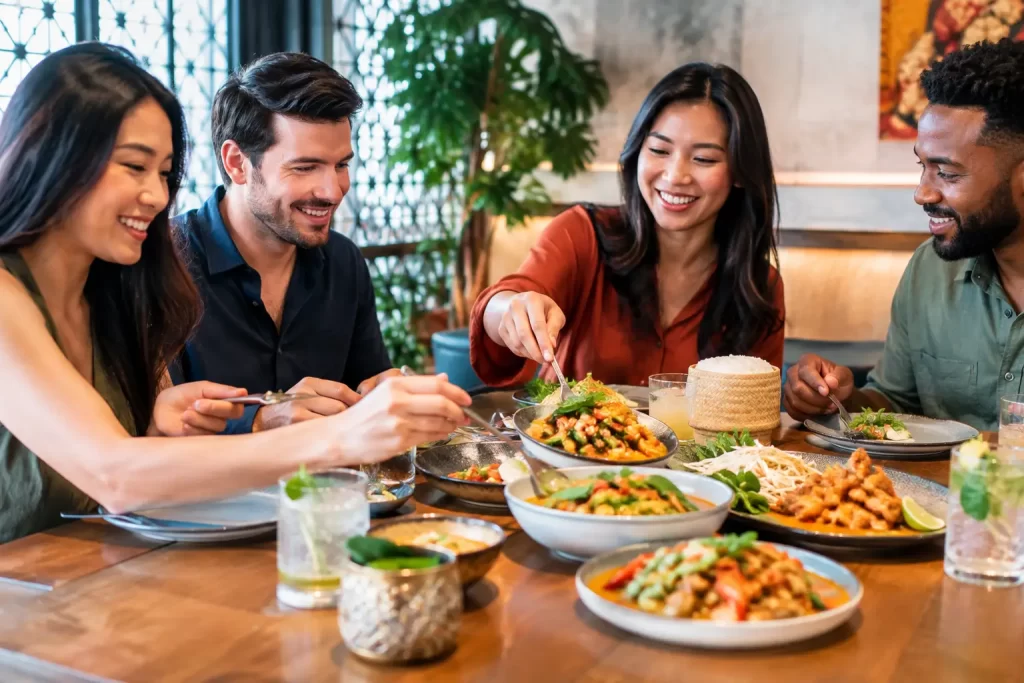
Thai dining becomes more fun when the table has variety. Rather than ordering one dish per person, build a spread that lets guests try different flavors and textures. The goal is balance: something spicy, something comforting, something fresh, and something satisfying for guests who prefer familiar favorites.
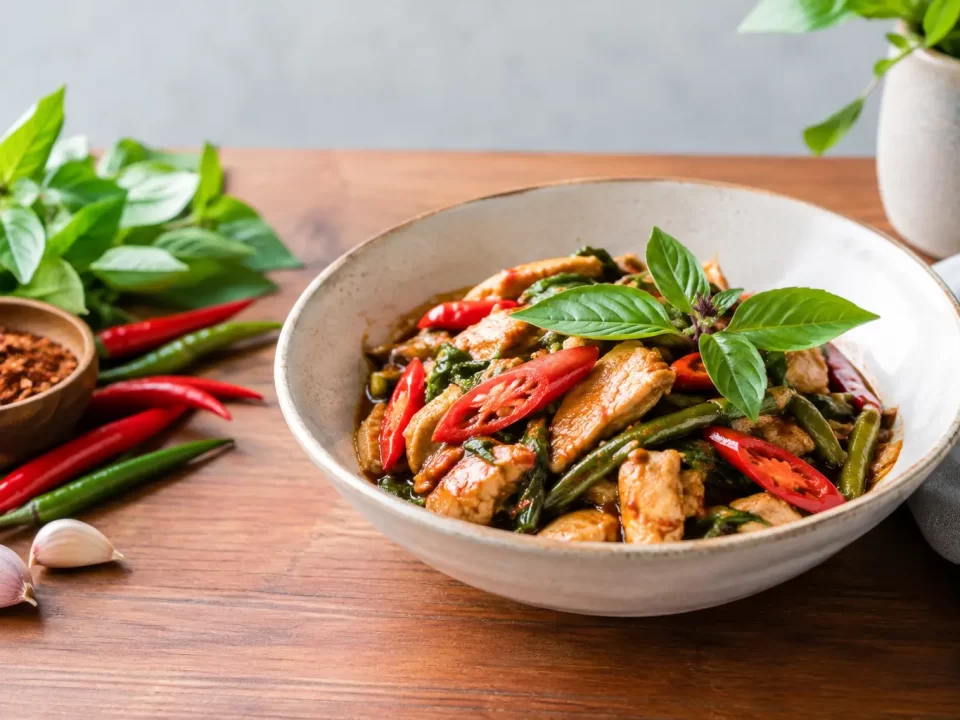
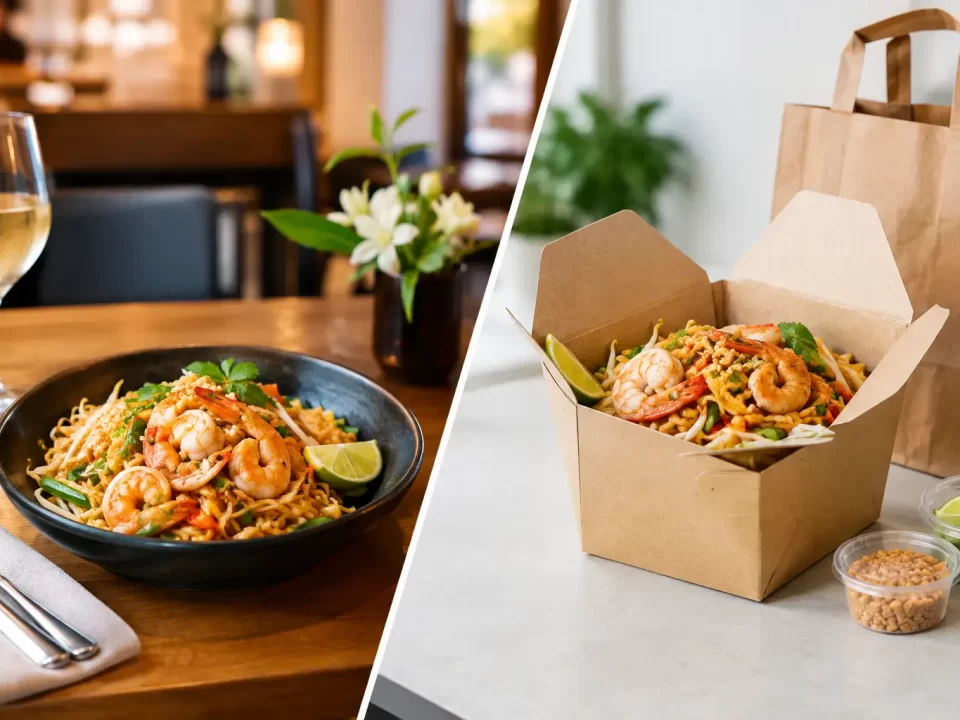
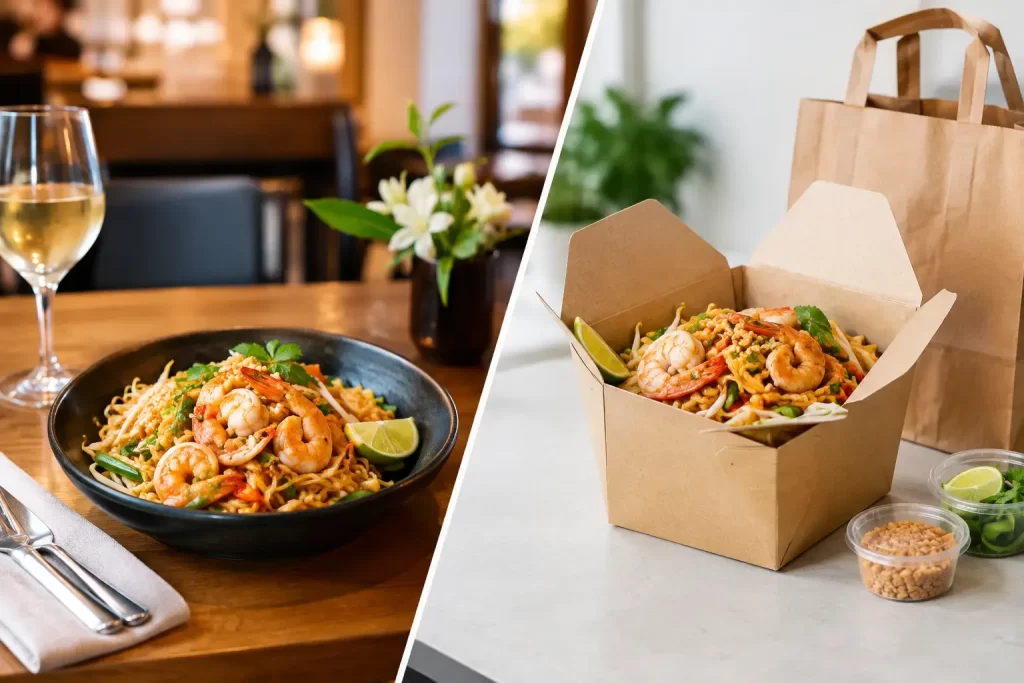
Start with a few shareable dishes to wake up the table, then add mains that cover different moods. A fragrant Tom Yum Seafood brings a bold, tangy kick, while Pad Thai offers the familiar savory-sweet comfort that many guests enjoy. Pad Kra Pao is a great choice for diners who want a little more heat and punch. Round out the meal with vegetables, rice, and a few milder selections so no one is left searching for something that suits them.
For a group of mixed appetites, it helps to ask guests one simple question before you book: are there any dishes they definitely want, or any flavors they avoid? You do not need to conduct a survey. A quick check prevents the common problem of ordering a table full of spicy food when half the group prefers gentler flavors.
Order for Variety, Not Just Quantity
More food is not always better if every dish tastes similar. A balanced order often includes a soup or curry, a noodle dish, a stir-fry, a vegetable dish, and rice to bring everything together. This gives guests options and makes the meal feel generous without becoming repetitive.
For larger groups, consider choosing a few dependable crowd-pleasers first, then adding one or two dishes for more adventurous diners. Thai cuisine has plenty to offer beyond the usual order, but a group dinner works best when everyone finds a plate they are excited to reach for.
Drinks and dessert deserve a place in the plan as well. Thai milk tea is a natural favorite for a sweet, cooling finish to bold flavors. If the group is celebrating, leaving room for dessert can turn an ordinary dinner into a proper occasion.
Set Expectations on Budget and Payment
One person quietly covering a large table can be stressful, especially when guests order freely without knowing the plan. Avoid awkwardness by deciding the budget approach before dinner. You might split the bill evenly, pay by household, have each guest cover their own share, or set a per-person spending range for an office group.
For a celebration, the host may want to handle the core meal while guests purchase extra drinks or desserts. For work gatherings, check whether the company needs a receipt, a specific payment method, or an itemized record. These details are not glamorous, but sorting them out early keeps the end of the meal easy.
If you are ordering shared dishes, remind guests that the total includes food for the table, not just the dish directly in front of them. This small bit of clarity makes shared Thai dining feel fairer and more relaxed.
Make the Arrival Easy for Everyone
Groups rarely arrive at exactly the same minute. Some guests will be early, others will be caught in traffic, and someone will always send a message saying they are “five minutes away.” Choose a meeting time that is slightly earlier than the reservation if the group needs to gather outside or find parking.
Send one clear message on the day with the restaurant name, location, reservation time, and the name the booking is under. If you have guests coming from different parts of town, selecting a neighborhood location that is convenient for most people can make a real difference to attendance and mood.
At Soi 55 Thai Kitchen, the appeal of neighborhood dining is simple: bold, delicious Thai flavors can fit naturally into a workday, a family plan, or a casual night out. Guests can focus on the people at the table instead of treating dinner like a major expedition.
When a Reservation Is Not Enough
For very large groups, private functions, or corporate events, ask whether a set menu, advance food order, or catering arrangement would make more sense. Pre-ordering can be helpful when time is limited or when you want dishes to arrive in a more coordinated flow. It can also make budgeting easier because the host knows the expected spend beforehand.
That said, pre-ordering is not necessary for every group. A smaller gathering may enjoy choosing dishes together once everyone arrives. The right approach depends on your group size, schedule, and how much flexibility guests want.
A well-planned Thai group dinner does not need a complicated spreadsheet or a dozen reminders. Confirm the numbers, communicate the important details, order with variety in mind, and leave enough room for the table to enjoy itself. When the aromas are rising, the dishes are being passed around, and everyone has found a favorite, the booking has done exactly what it should.