What Gives Pad Thai Flavor Its Famous Balance?
August 31, 2026
9 Best Spicy Thai Noodle Dishes Worth Trying
September 4, 2026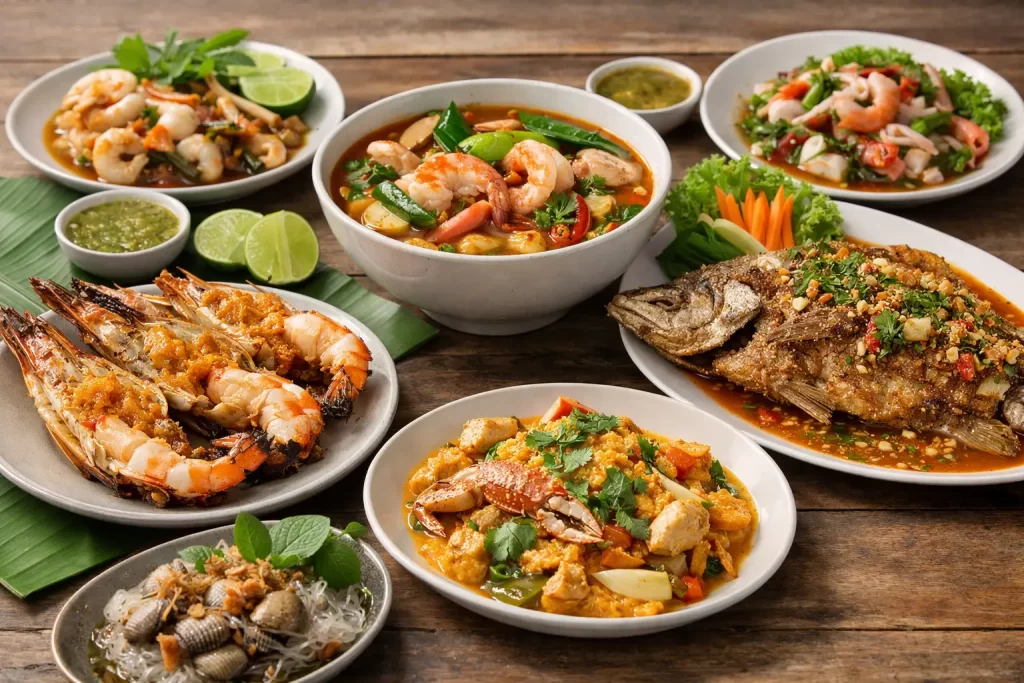
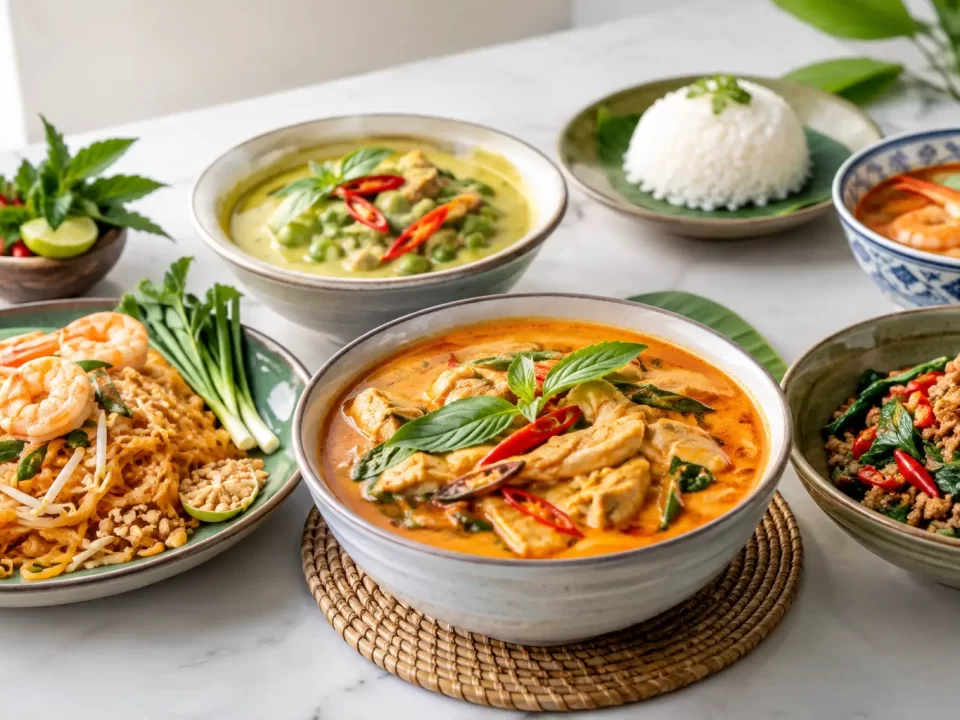
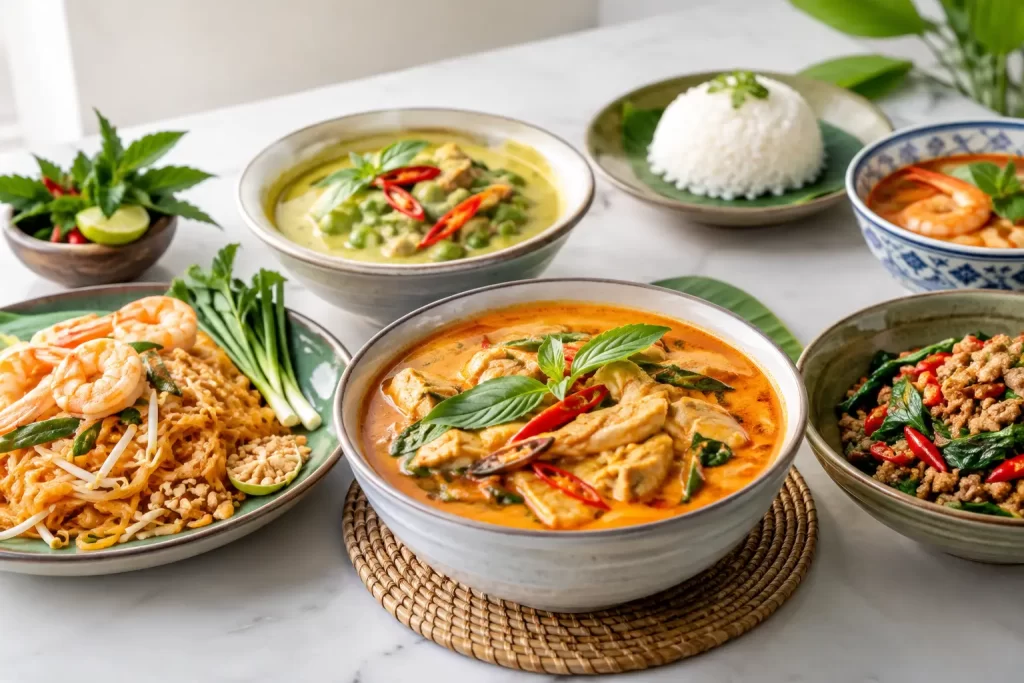
A great Thai seafood meal does not rely on seafood alone. It builds excitement in layers: lime that wakes up the palate, chilies that bring a lively kick, herbs that smell fresh and bright, and sauces that balance sweet, salty, sour, and savory notes in one memorable bite. That is what makes Thai seafood such a favorite for group lunches, family dinners, and occasions when plain grilled fish simply will not do.
From a steaming bowl of Tom Yum to a whole fish dressed in a spicy, fragrant sauce, these dishes are designed for the center of the table. They invite everyone to share, taste, and reach for one more spoonful of sauce over rice.
What Makes Thai Seafood Taste So Special?
Thai cooking is often described through four key tastes: spicy, sour, sweet, and salty. With seafood, that balance feels especially vivid. Prawns, squid, fish, and shellfish have a clean, delicate sweetness, so they pair beautifully with assertive ingredients such as lemongrass, galangal, kaffir lime leaves, fresh chilies, fish sauce, tamarind, and lime juice.
The goal is not always intense heat. A well-made seafood dish can be fiery, but it should also have lift and contrast. The richness of crab or prawns may be cut with citrus. A crisp fried fish may be paired with a juicy mango salad. Squid may be quickly cooked in a basil sauce that is savory, aromatic, and just sweet enough.
Freshness matters, too. Seafood should be cooked only as long as needed. Prawns should stay juicy, squid should remain tender, and fish should flake easily without becoming dry. When the ingredients are treated with care, the sauces support their natural flavor rather than cover it up.
7 Thai Seafood Dishes Worth Sharing
1. Tom Yum Seafood
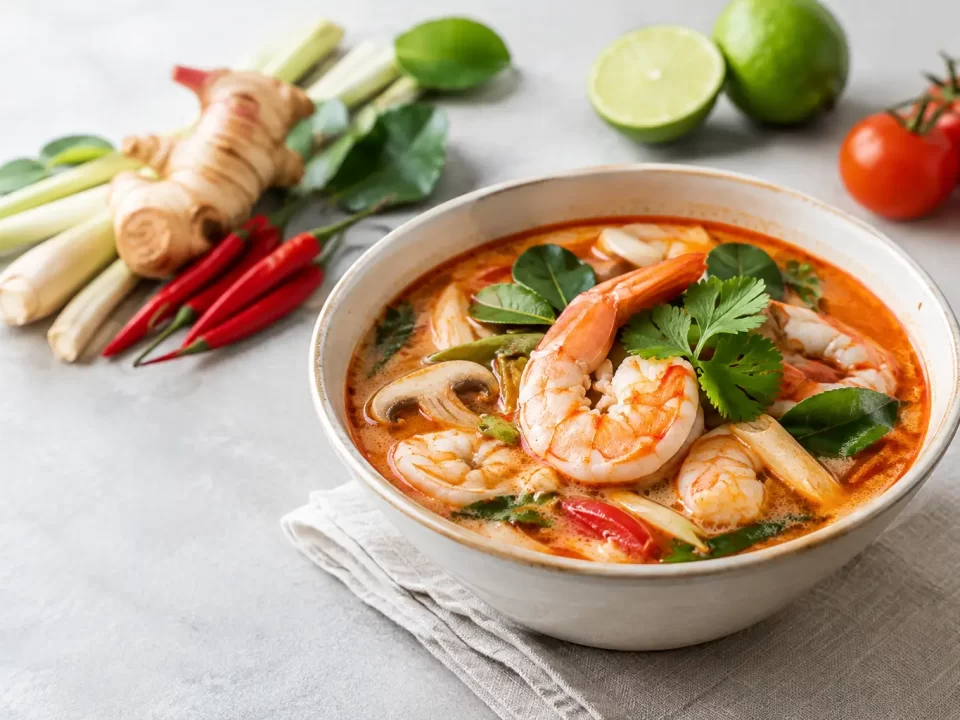
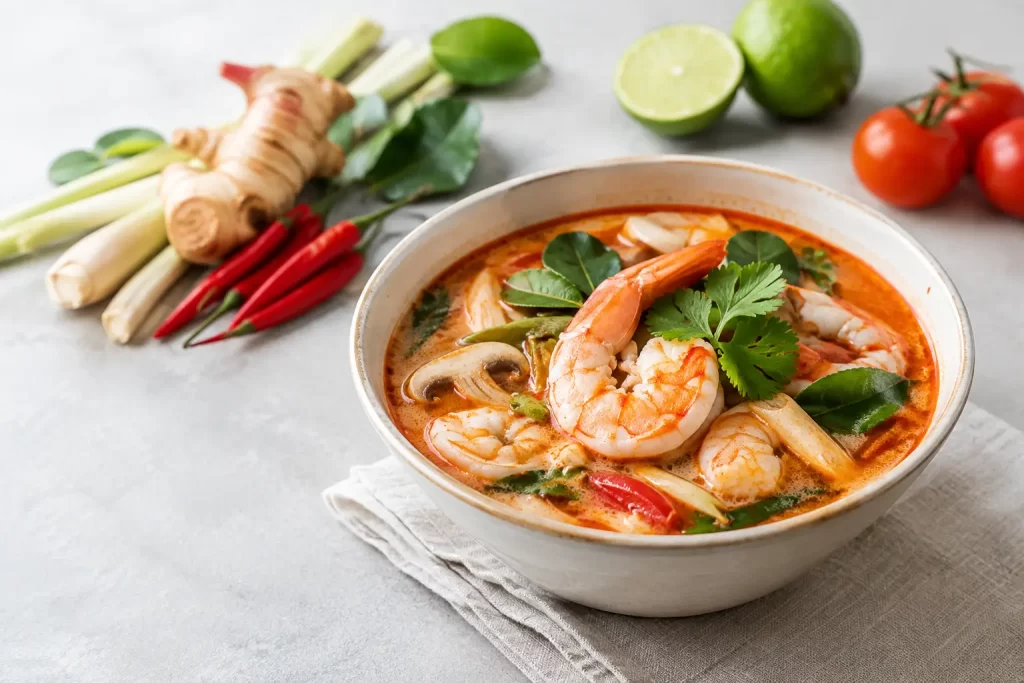
Tom Yum Seafood is the dish many diners think of first, and for good reason. The broth arrives hot, aromatic, and full of personality. Lemongrass, galangal, lime leaves, chilies, and lime create its signature sharp fragrance, while prawns, squid, fish, or other seafood add satisfying depth.
There are different styles of Tom Yum. A clear version is lighter and more citrus-forward, while a creamy version has a smoother, fuller body. Neither is automatically better. Choose clear Tom Yum when you want something brisk and refreshing, especially alongside fried dishes. Choose a creamier broth when the table wants a more comforting, indulgent centerpiece.
2. Steamed Fish with Lime and Chili
This is a dish for diners who enjoy clean seafood flavor with a serious burst of tang. A whole steamed fish is typically topped with a sauce of garlic, chilies, lime juice, and herbs. The flesh stays moist and mild, while the sauce delivers a bright, spicy punch.
It is one of the best choices for a shared table because it offers balance. Spoon the sauce over steamed rice, add a little fish, and follow it with a crunchy vegetable dish. If your group has mixed spice preferences, ask for the heat to be adjusted where possible. The lime and garlic should still shine even at a gentler chili level.
3. Deep-Fried Fish with Mango Salad
Crispy fish and green mango are a classic contrast worth seeking out. The fish brings crunch and savory richness, while the mango salad adds acidity, sweetness, herbs, and often a little chili. Peanuts or cashews may add another layer of texture.
This dish is particularly good when your table has ordered soup or curry. Its crisp texture breaks up softer, saucier dishes and keeps the meal feeling lively. Eat it soon after it reaches the table, when the fish is at its crispiest and the salad is still fresh.
4. Stir-Fried Squid with Thai Basil
Squid is easy to overcook, which is why a good basil stir-fry is such a pleasure. When prepared properly, the squid is tender with a light bite, coated in a savory sauce and tossed with fragrant Thai basil, garlic, and chilies.
This dish is direct, bold, and made for rice. It is a smart order for diners who love Pad Kra Pao-style flavors but want seafood instead of a more traditional protein. The basil adds an unmistakable peppery aroma that keeps the dish from feeling heavy.
5. Prawns in Tamarind Sauce
Tamarind is one of Thai cuisine’s quiet heroes. It has a deep tang that is less sharp than lime, with a fruity, almost caramel-like quality when balanced with palm sugar and savory seasoning. With prawns, it creates a sauce that clings beautifully to the shell and meat.
Expect a flavor that is sweet-tart, rich, and very moreish. This is a great option for diners who prefer moderate heat but still want a dish with plenty of character. Do not let the sauce go to waste – it is excellent over plain rice.
6. Thai Curry with Seafood
Seafood curry can take several forms. A red curry may be rich and spicy, green curry tends to be herbaceous and vibrant, and a more turmeric-forward southern-style curry can bring a deeper, earthier heat. The right choice depends on what else is on your table.
If you are ordering fried fish and stir-fries, a curry adds welcome creaminess and sauce. If Tom Yum is already the main event, consider whether another spicy, soupy dish might be too similar. Variety is usually the secret to a better shared meal.
7. Stir-Fried Clams with Chili Paste
For diners who want something intensely savory, clams stir-fried with chili paste are hard to beat. The briny juices of the clams mingle with sweet, smoky chili paste, basil, garlic, and chilies to create a sauce that begs for rice.
This is a bolder dish, not a delicate one. It suits a table that enjoys strong Thai flavors and does not mind getting a little hands-on. The reward is in the sauce, the aroma, and the fun of sharing a dish that feels made for a long, unhurried meal.
How to Build a Better Thai Seafood Table
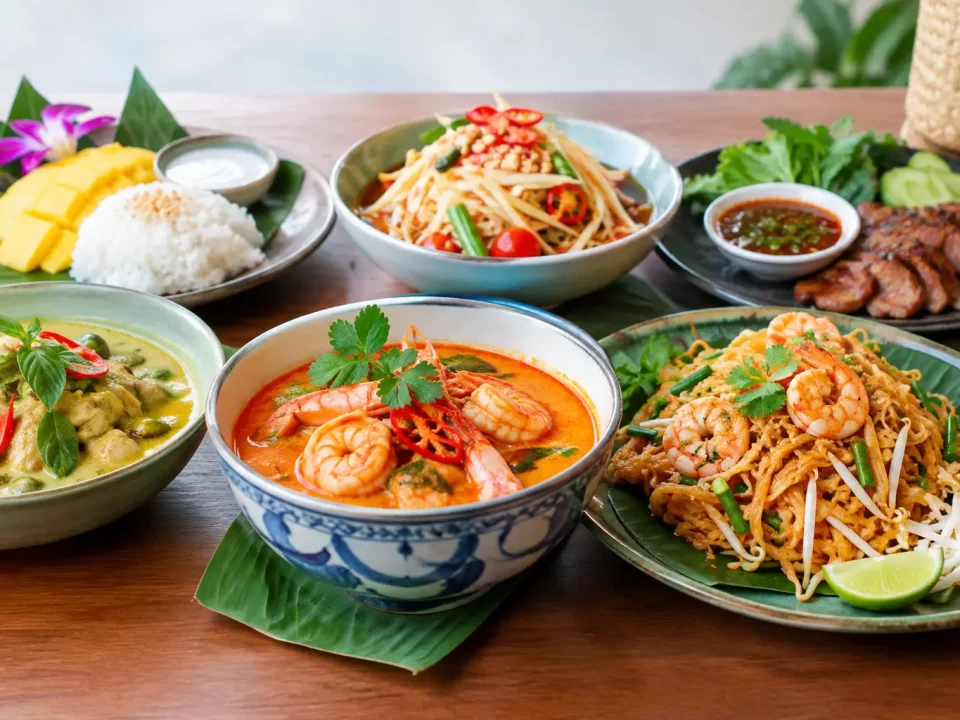
The most enjoyable Thai seafood spread is not seven rich dishes ordered at random. Think about contrast. Start with a soup such as Tom Yum, then add one fish dish, one stir-fry, and one vegetable or salad. Rice is essential for soaking up sauces and giving the meal a comforting foundation.
For a group of four, a steaming seafood soup, a whole fish, a basil stir-fry, a fresh vegetable dish, and rice can feel generous without becoming repetitive. If you add a curry, consider choosing a lighter fish preparation rather than another heavily sauced dish.
Heat level deserves a little planning. Thai chilies bring flavor as well as spice, but everyone at the table should be able to enjoy the meal. A medium level can work well for a mixed group, with extra chili served separately if available. Diners who love heat can build it up; diners who are more cautious can still enjoy the herbs, citrus, and savory sauces.
Seafood That Brings People Together
Thai seafood is at its best when it arrives in the middle of the table, fragrant enough to make everyone pause before the first bite. It is food for conversations, shared serving spoons, and plates of rice passed around between friends and family.
At Soi 55, a bowl of Tom Yum Seafood can bring that unmistakable Thai energy to an everyday lunch or a full group dinner. Order with a sense of contrast, leave room for something fresh and something crispy, and let the final spoonful of sauce over rice be the reason everyone starts planning the next meal.