Best Thai Food Penang: What to Order
July 22, 2026
Pad Thai Review: What Makes Every Bite Count
July 26, 2026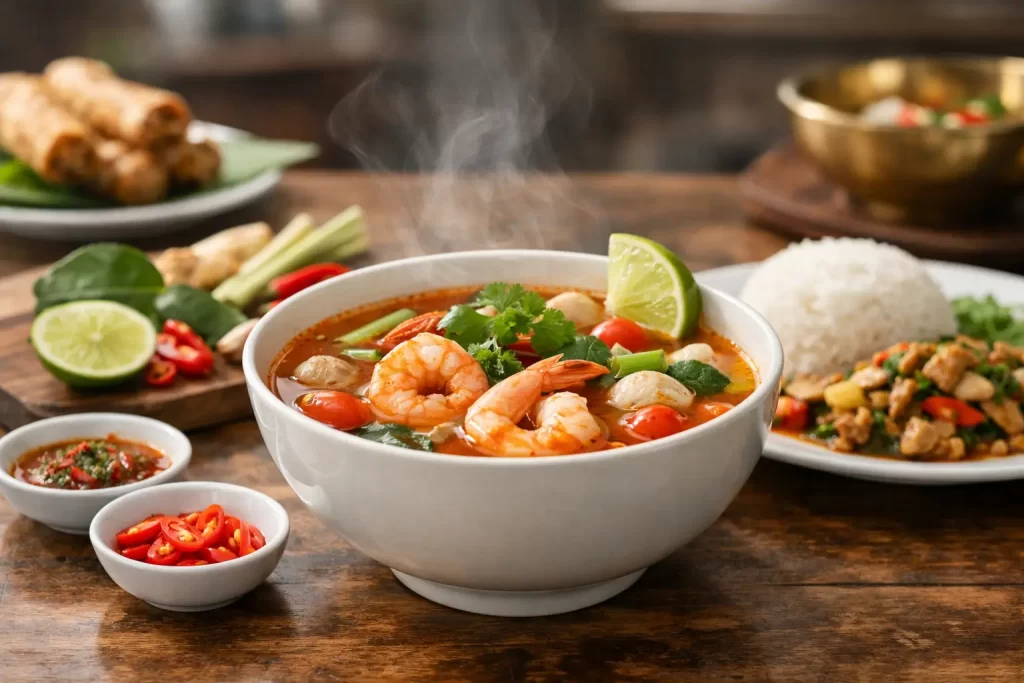
Tom yum should arrive at the table smelling bright, hot, and impossible to ignore. The first spoonful can be sour with lime, fragrant with lemongrass, savory with chili, and rich with seafood or chicken. Knowing how to order tom yum helps you get the version that suits your appetite, your heat tolerance, and the rest of the meal – especially when you are sharing with family, friends, or coworkers.
How to Order Tom Yum With Confidence
Start by deciding what you want from the soup. Tom yum is not one fixed recipe. Its character comes from the balance of sour, spicy, salty, and aromatic flavors, but the broth style, protein, portion size, and heat can change the experience dramatically.
If you are dining with a group, tom yum is usually best ordered as a shared dish. It has enough bold flavor to wake up the table between bites of rice, stir-fries, noodles, and grilled dishes. For a lighter lunch, it can also work as the centerpiece of your own meal with a bowl of steamed rice.
When placing your order, tell your server whether you prefer a clear or creamy broth, choose your protein, and be honest about spice. Those three choices make the biggest difference.
Choose clear or creamy broth
Clear tom yum is lively, clean, and intensely aromatic. You will notice the citrusy lift of lime and lemongrass first, followed by galangal, kaffir lime leaf, chili, and a savory depth from the stock. It is an excellent choice when the table is also ordering rich dishes, because its tangy finish keeps the meal feeling fresh.
Creamy tom yum has a fuller body and a softer, more rounded heat. Depending on the restaurant’s recipe, the broth may gain its richness from chili paste, milk, or another creamy element. It still carries tom yum’s signature sour-spicy personality, but the flavors feel more comforting and substantial. Choose it when you want a soup that can stand up to a hearty appetite or when you enjoy a richer spoonful.
Neither style is automatically better. Clear tom yum highlights sharp aromatics; creamy tom yum offers a deeper, more indulgent texture. If you are unsure, think about the weather, your mood, and what else is on the table.
Pick a protein that matches your meal
Tom Yum Seafood is a popular choice for good reason. Seafood brings natural sweetness and a satisfying briny flavor that works beautifully with the sour, spicy broth. It is often the most celebratory option for a group dinner, particularly when everyone wants a dish that feels generous and memorable.
Chicken tom yum is familiar, filling, and easy to pair with rice. It can be a smart choice for a casual lunch or for diners who want the tom yum flavor profile in a comforting, everyday format. Some restaurants also offer fish, prawns, mushrooms, or mixed options. Ask what is available if you have a preference, because ingredient selections can vary by location and season.
If your table includes people with different tastes, seafood tom yum can be the shared soup while another mild protein dish gives heat-sensitive diners a comfortable alternative. Good group ordering is not about making everyone eat the same thing. It is about creating a table where every bite has a place.
Set your spice level realistically
Tom yum should have chili warmth. That heat is part of the dish’s energy, not an afterthought. Still, there is no prize for ordering more spice than you can enjoy.
If you rarely eat spicy food, ask for mild and let the soup’s sourness and aromatics do the talking. If you enjoy a noticeable kick but still want to taste every ingredient, medium is often the sweet spot. Hot is for diners who already know they enjoy Thai-style chili heat and want the broth to arrive with real fire.
A useful rule: order one level gentler than your bravest instinct when tom yum is sharing the table with several other spicy dishes. Heat builds across a meal. A medium tom yum alongside a fiery stir-fry can feel much hotter than either dish on its own.
What to Say When You Order
Ordering does not need to feel complicated. A clear request gives the kitchen what it needs and helps you avoid surprises. You might say: “We’d like a creamy seafood tom yum, medium spicy, to share with rice.” Or: “Can we have a clear chicken tom yum, mild, as part of our lunch?”
For a group, ask about the serving size before you commit. A small bowl may be perfect for two diners with several other dishes, while a larger portion makes more sense for a family meal or office gathering. If the restaurant offers a choice, ordering slightly more than you think you need is often worthwhile. Tom yum tends to disappear quickly once everyone starts ladling it over rice.
If you have dietary needs or ingredient concerns, tell the server before ordering rather than trying to guess from the menu description. Thai cooking is layered, and a quick conversation is the easiest way to make the meal more enjoyable.
Pair Tom Yum With the Right Dishes
Rice is tom yum’s natural partner. Steamed jasmine rice softens the chili, catches the fragrant broth, and turns a bowl of soup into a satisfying meal. If the soup is particularly spicy, rice is not a side thought – it is your reset button between spoonfuls.
Tom yum also works especially well with noodle dishes such as Pad Thai. The sweet-savory noodles and bright, sour soup create contrast without competing. Add a basil-forward stir-fry or a crisp vegetable dish, and the table has heat, freshness, richness, and texture instead of several dishes pulling in the same direction.
Avoid ordering too many heavy, creamy dishes alongside creamy tom yum unless your group specifically wants a rich feast. In that case, balance the spread with something fresh, grilled, or herbaceous. With clear tom yum, you have more room to add fuller flavors because the broth acts as a palate-cleansing counterpoint.
At Soi 55, a shared tom yum alongside Pad Thai and Thai Milk Tea makes an easy, flavor-packed starting point for a relaxed lunch or dinner. The soup brings the heat and tang, while the rest of the table gives everyone a different way to enjoy the meal.
Know What You Are Tasting
Part of the pleasure of tom yum is that every spoonful can taste slightly different. You may catch a sharp edge of lime in one bite, then a floral note from lemongrass, then the earthy warmth of galangal. Mushrooms soak up the broth, while seafood or chicken gives it substance.
You do not need to eat every aromatic garnish. Pieces of lemongrass, galangal, and kaffir lime leaf are often there to perfume the soup rather than to be eaten like vegetables. If they are too fibrous or intense, set them aside politely and keep enjoying the broth.
The ideal tom yum is balanced, not merely spicy. If it makes your mouth water before the chili hits, if the sourness feels bright rather than harsh, and if you keep reaching for another spoonful, you ordered well.
A Better Way to Share Tom Yum
When the bowl arrives, serve a little broth and some ingredients into each person’s small bowl rather than letting one diner claim all the seafood or mushrooms first. Keep the main bowl near the center of the table and return to it throughout the meal. That is how tom yum does its best work: not as a rushed starter, but as the bold, warming thread that connects every dish.
Order the version that sounds delicious to you, choose a heat level you can genuinely savor, and let a bowl of tom yum bring the heart of Thailand to your table.