Thai Seafood Dishes Guide for Your Next Thai Meal
September 10, 2026
Thai Tea Caffeine: How Much Is in Your Glass?
September 14, 2026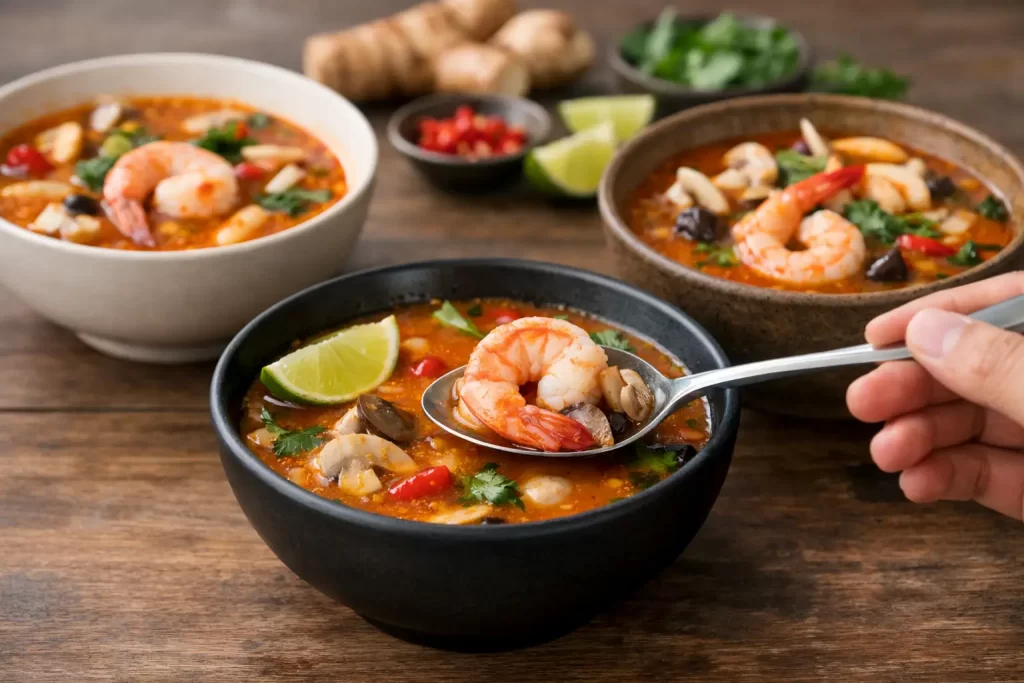
A great Tom Yum arrives with its aroma already doing half the work: citrusy lime, fragrant lemongrass, chilies, and the savory depth of a broth that wakes up your appetite. Knowing how to choose tom yum soup is less about finding the single “best” bowl and more about choosing the version that suits your mood, your spice comfort, and the dishes everyone at the table plans to share.
For a quick lunch, you may want a lighter, brighter soup that leaves room for noodles or rice. For a lively dinner with friends or family, a generous seafood Tom Yum can become the center of the table, bringing everyone back for another spoonful. The details matter, because Tom Yum can be sharp and clear, rich and creamy, gently warming, or seriously fiery.
Start With the Tom Yum Style You Want
The first choice is the broth itself. Traditional clear Tom Yum is vivid, aromatic, and refreshingly sour. Its flavor comes from a careful balance of lemongrass, galangal, kaffir lime leaves, lime juice, chilies, and savory stock. It is an excellent choice when you want something that cuts through richer dishes, especially fried appetizers, stir-fried noodles, or a flavorful rice plate.
Creamy Tom Yum, often made with a touch of chili paste and evaporated milk or a similar rich element, has a rounder body and a fuller mouthfeel. It still carries that recognizable sour-spicy character, but the heat feels softer and the broth clings more generously to seafood and mushrooms. Choose this style if you want a more comforting soup or if Tom Yum is going to be a main part of your meal rather than a small side to share.
Neither style is automatically more authentic or more satisfying. It depends on what you enjoy. Clear Tom Yum highlights the herbs and tang. Creamy Tom Yum leans into richness and depth. If your table includes both first-time Thai food diners and regular Tom Yum fans, creamy can feel more familiar, while clear offers the clean, lively punch that longtime fans often crave.
How to Choose Tom Yum Soup by Main Ingredient
Once you know the broth style, look at what is inside the bowl. Tom Yum Seafood is a natural choice for diners who want variety and a fuller, more celebratory meal. Seafood brings a sweet, briny character that works beautifully against lime and chilies, while mushrooms absorb the broth’s fragrant flavor. It is also especially easy to share, which makes it a strong pick for family meals, office lunches, and group dinners.
Shrimp-focused Tom Yum is often a little cleaner and sweeter in flavor. Choose it if you prefer a straightforward seafood profile and want every bite to feel light but satisfying. Fish can offer a more delicate texture, though it needs gentle cooking to stay tender. Mixed seafood gives more contrast in each spoonful, which is ideal for diners who enjoy discovering different textures as they eat.
Chicken Tom Yum is a comforting alternative when you want something hearty without the briny notes of seafood. The broth remains bold, but the overall effect can be gentler and more familiar. Mushroom Tom Yum is a smart choice for diners looking for a vegetable-forward bowl with plenty of savory depth. Mushrooms may be modest-looking, but in a properly seasoned Tom Yum, they become intensely flavorful.
The best choice also depends on the rest of the order. If the table already has several seafood dishes, chicken or mushroom Tom Yum creates welcome contrast. If you are ordering grilled dishes, fried snacks, and rice, seafood Tom Yum can tie everything together with a bright, aromatic counterpoint.
Be Honest About Your Spice Preference
Tom Yum should have energy. The chilies are not there only to make the soup hot – they add fruitiness, warmth, and a lingering spark that balances the sourness. Still, there is no prize for choosing a heat level that makes it hard to enjoy the food in front of you.
If you are spice-sensitive, start mild or medium and let the broth’s herbs shine. A well-made mild Tom Yum should never taste flat. You should still notice the tart lime, savory stock, and perfume of lemongrass. Medium is usually the sweet spot for diners who enjoy heat but want to taste every ingredient. Spicy is for those who want the bowl to build with every spoonful and keep pace with a table full of bold Thai dishes.
When choosing for a group, consider the person with the lowest heat tolerance, then add extra chilies or chili condiments separately for guests who want more fire. This keeps the meal fun instead of turning one shared bowl into a challenge. A cooling Thai milk tea can also be a welcome partner for a spicier order, especially when the meal includes other chili-forward favorites.
Look for Balance, Not Just Heat
The soul of Tom Yum is balance. The best bowl does not taste only sour, salty, creamy, or hot. It moves between all of those notes, then finishes with the fresh lift of herbs. Before ordering, think about which part of that balance you enjoy most.
Choose clear Tom Yum when you love sharp lime, fresh herbs, and a broth that feels light on the palate. Choose creamy Tom Yum when you want the same aromatic character with more richness and a slightly softer edge. If you dislike very sour flavors, creamy is usually the more approachable starting point. If you love sour candies, citrusy sauces, and bright flavors that make you reach for another bite, clear Tom Yum may be your bowl.
Saltiness matters too. Tom Yum is meant to be savory enough to make you want rice, but it should not overwhelm the lime and herbs. That is why a bowl of steamed rice is more than an add-on. A spoonful of rice between sips can soften the broth, turn it into a fuller meal, and give you a calm moment before the next spicy mouthful.
Match the Soup to the Occasion
For a solo lunch, choose the bowl that can carry the meal comfortably. Creamy seafood or chicken Tom Yum with rice is filling without feeling heavy. If you are ordering noodles as well, a clear Tom Yum is often the better companion because it keeps the meal from becoming too rich.
For two people, one shared Tom Yum alongside a noodle dish and a stir-fry creates the kind of Thai meal that never feels repetitive. The soup refreshes the palate between bites and gives the table a warm, communal rhythm. For larger groups, a generous seafood Tom Yum makes sense because nearly everyone can take a small bowl, taste the broth, and return to their favorite dishes.
For celebrations and work gatherings, think about variety. A clear, moderately spicy Tom Yum is a practical shared choice when the menu also includes richer curries, crispy appetizers, and sweet drinks. If your group already knows it loves creamy, spicy food, go for the richer version and make it one of the meal’s main attractions.
Notice the Signs of a Memorable Bowl
You can tell a lot from the first spoonful. The aroma should be fresh and herbaceous, not dull or overly heavy. The broth should taste layered: first tangy, then savory, then warm with chili. Seafood should be tender rather than overcooked, chicken should be moist, and mushrooms should carry the flavor of the soup without becoming mushy.
A good Tom Yum also invites adjustment without needing rescue. You might add a little rice, pair it with a cool drink, or alternate it with Pad Thai, but the bowl should already feel complete. At Soi 55, Tom Yum Seafood is made for that kind of shared-table experience: bold, fragrant, and satisfying enough to bring the heart of Thailand to an everyday meal.
Order the Bowl You Will Want Another Spoonful Of
Do not choose Tom Yum only because it is a familiar name on the menu. Choose it for the feeling you want from the meal: clear and zesty, creamy and comforting, gently spicy, or full of chili heat. Consider who is sharing the table, what else you are ordering, and whether you want the soup to be a refreshing companion or the dish everyone remembers.
The right bowl is the one that makes the table go quiet for a second after the first sip, then brings the conversation back with a simple question: “Can I have some more?”