Best Thai Catering Menu Ideas for Any Crowd
September 8, 2026
How to Choose Tom Yum Soup for the Table
September 12, 2026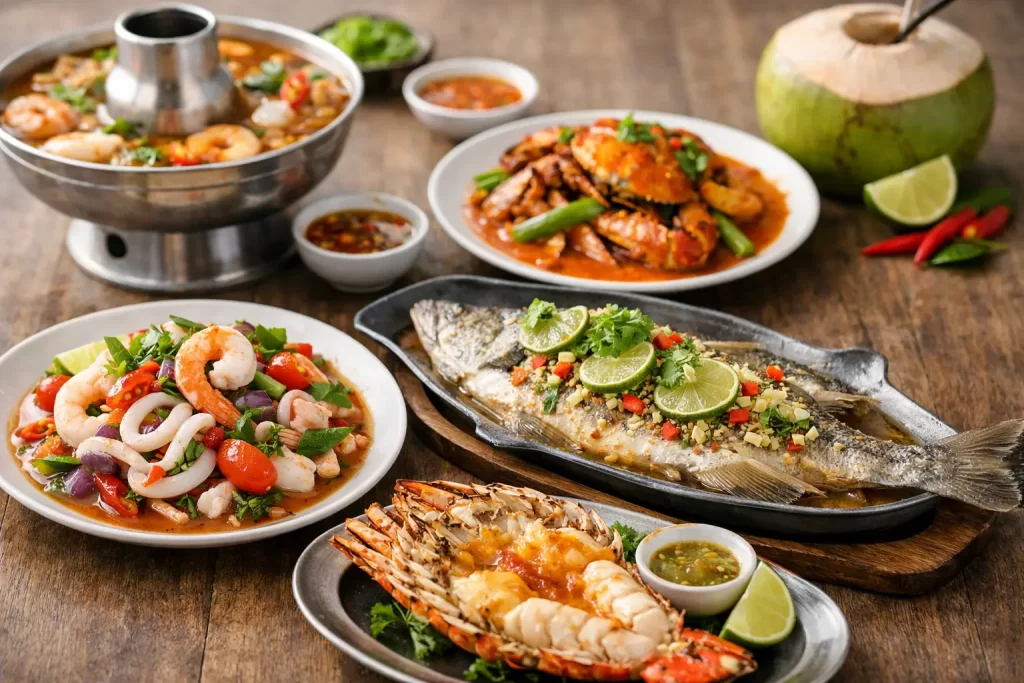
A great Thai seafood meal should arrive with steam rising from the table, lime in the air, and enough bright heat to make everyone reach for another spoonful. This Thai seafood dishes guide helps you order beyond the familiar, understand what each dish brings to the table, and build a meal that feels lively, generous, and full of bold and delicious tastes.
Thai cooking treats seafood as something to wake up, not cover up. Fresh fish, prawns, squid, crab, and shellfish meet ingredients with real character: lemongrass, galangal, kaffir lime leaf, chili, fish sauce, tamarind, garlic, and fresh herbs. The result can be sour, spicy, smoky, salty, and sweet in a single bite. That contrast is the point.
What Makes Thai Seafood Dishes So Memorable?
The best Thai seafood dishes are built on balance. A rich prawn can handle a sharp lime dressing. Delicate fish becomes more exciting with crispy garlic and chili. Squid gets a smoky lift from a hot wok, while a fragrant curry gives seafood a creamy, aromatic home.
Texture matters just as much as flavor. You may find soft fish with a crisp-edged skin, bouncy prawns in a fiery broth, or tender squid paired with crunchy vegetables. This is why Thai seafood works especially well for group dining. One dish may be comforting, another spicy, another fresh and herbaceous, and together they keep the meal interesting.
Heat levels can vary widely. A dish that looks gentle may carry a serious chili kick, while a bright soup can be adjusted to let its sourness and herbs shine. If you are ordering for a mixed group, choose one spicy centerpiece and balance it with milder seafood dishes, rice, and vegetables.
Thai Seafood Dishes Guide: The Essential Orders
Tom Yum Seafood
Tom Yum Seafood is the dish to order when you want Thai flavor at full volume. The broth is fragrant with lemongrass, galangal, and lime leaf, then sharpened with lime and chili. Prawns, squid, fish, and other seafood absorb that spicy-sour character without losing their own sweetness.
There are two common directions for tom yum. A clear version feels lighter, punchier, and especially good when you want the herbs to lead. A creamy version has a rounder body and a gentler-looking finish, though it can still be wonderfully spicy. Neither is automatically better. Choose clear tom yum for a fresher, cleaner meal, or creamy tom yum when the table wants something richer to spoon over rice.
Thai-Style Steamed Fish With Lime and Chili
Whole steamed fish is a celebration dish, but it does not need a special occasion. The fish is usually served with a bright sauce made from lime, garlic, chili, and herbs. The flesh stays soft and naturally sweet, while the sauce supplies the spark.
This is one of the smartest choices for diners who enjoy strong Thai flavor but do not want a heavy dish. It also rewards sharing. Start at the cheeks and collar, where the meat is especially tender, then spoon the sauce over white rice so none of its flavor goes to waste.
Grilled Fish
Grilled fish brings a different kind of pleasure: char, smoke, and a little crispness around the skin. Depending on the preparation, it may be served with a tangy chili sauce, a green seafood sauce, or herbs that cut through the richness.
Choose grilled fish when your table already has a soup or curry and needs a drier, smokier contrast. It is also an easy crowd-pleaser for diners who prefer their chili on the side. The key is not to drown the fish in sauce. Taste it first, then add enough sauce to brighten each bite.
Stir-Fried Squid With Basil
Squid and basil are a powerful match. The squid should be quickly cooked so it stays tender with a light springy bite, while holy basil, garlic, and chili bring savory heat. It is a straightforward dish with plenty of personality, especially alongside hot jasmine rice.
This is a good choice if your group loves the familiar, savory style of Pad Kra Pao but wants seafood on the table. Ask for the spice level that suits your group. Basil dishes can be deeply fragrant at a mild heat, but chili lovers can take them in a much bolder direction.
Stir-Fried Prawns With Tamarind
Tamarind gives prawns a sweet-sour glaze with depth rather than simple sweetness. The flavor is darker and fruitier than lime, often paired with fried shallots, chili, or crisp garnishes. It is an excellent bridge between spicy dishes and milder ones.
For a table with different preferences, tamarind prawns are often a safer shared order than a very fiery salad. They are flavorful enough for confident Thai-food fans and approachable enough for someone who is still learning the menu.
Seafood Curry
Thai seafood curry can take several forms, from the warm sweetness of a red curry to the aromatic depth of green curry or the softer richness of a coconut-based yellow curry. Seafood cooks quickly, so timing matters. When done well, the prawns remain juicy, the fish stays intact, and the curry carries the fragrance rather than overpowering the seafood.
Curry is best ordered with rice and at least one fresh or tangy dish. Its creamy texture needs contrast. A lime-forward fish, crisp vegetables, or a spicy salad can keep the meal from feeling too rich.
How to Build a Thai Seafood Meal for the Table
The easiest way to order well is to think in contrasts rather than choosing every dish from the same flavor family. Start with a soup such as Tom Yum Seafood. Add one grilled or steamed fish dish for clean, natural sweetness. Follow with a wok dish, such as basil squid or tamarind prawns, then include rice and a vegetable dish to bring everything together.
For four or more people, a balanced spread may include:
- One spicy-sour soup
- One whole fish dish, grilled or steamed
- One stir-fried prawn or squid dish
- One curry or mild vegetable dish
- Jasmine rice for the whole table
If your group is smaller, do not feel pressured to order everything. A tom yum, a seafood wok dish, and rice can be a satisfying meal for two. The better question is whether the dishes offer different textures and levels of richness.
Ordering Seafood With Confidence
Freshness is the foundation. Seafood should smell clean and mild, never overly fishy. Fish should be moist and flaky, prawns should be firm but not tough, and squid should be tender rather than chewy. At a good Thai restaurant, the kitchen respects each ingredient’s cooking time instead of treating all seafood the same.
It also helps to be clear about spice. “Medium” can mean very different things from one kitchen to another. If you are unsure, ask for a comfortable level and add chili sauce later. This is especially useful when dining with children, coworkers, or guests who enjoy Thai flavor but have different heat limits.
Sauces deserve attention, too. Seafood sauce often combines garlic, chili, lime, and herbs, making it bright enough to lift grilled fish or prawns. Use it gradually. Thai food is about balance, and a little sauce can transform a bite without hiding the ingredient you ordered.
Bring the Heart of Thailand to a Shared Table
Thai seafood is at its best when the table is active: someone ladling tom yum into bowls, someone passing rice, and someone insisting that everyone try the fish with extra lime sauce. It turns dinner into a shared experience rather than a plate-by-plate routine.
At Soi 55, signature Thai flavors are made for exactly that kind of gathering, whether it is a family meal, a catch-up with friends, or an office dinner that deserves more excitement than the usual. Order with contrast, taste generously, and let the seafood dishes bring the heart of Thailand to your table.