A Guide to Authentic Thai Flavors
June 16, 2026
How to Plan Thai Catering That Guests Love
June 20, 2026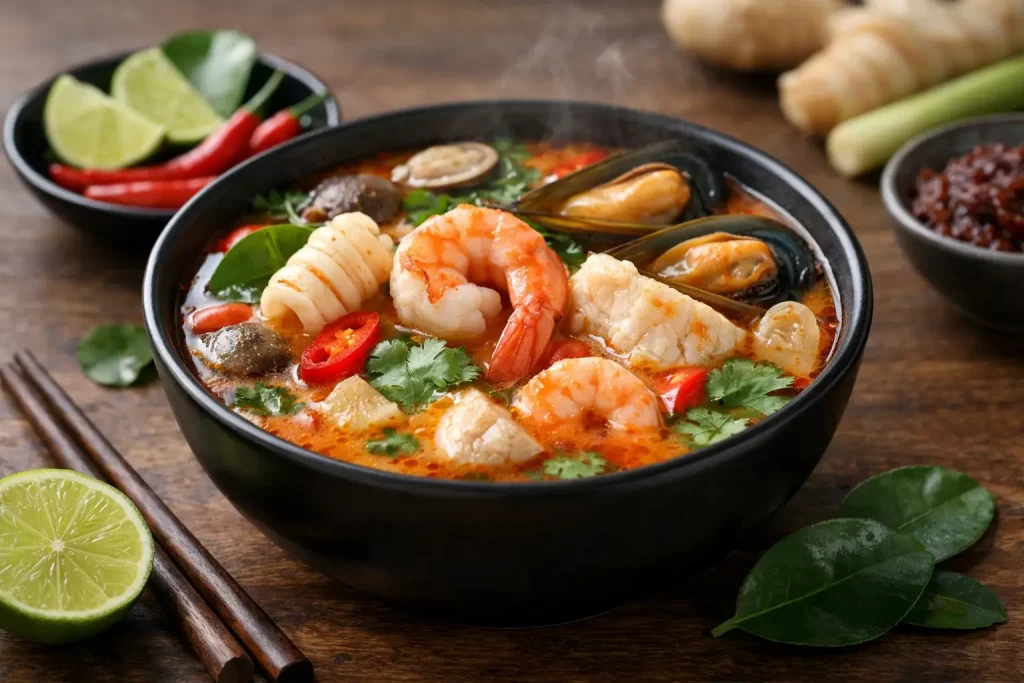
One spoonful tells you this is not a shy soup. If you have ever wondered what is tom yum seafood, the short answer is this: it is a hot and sour Thai soup built on an aromatic broth, then filled with seafood such as shrimp, squid, fish, or mussels for a bright, spicy, deeply satisfying dish.
What makes it memorable is the balance. Tom yum seafood is not only spicy, and it is not only sour. It brings together heat, citrusy sharpness, savory depth, and fragrant herbs in a way that wakes up your appetite almost instantly. That is why it has become one of the most recognized Thai dishes on restaurant menus, and one of the easiest ways to understand the heart of Thai cooking.
What Is Tom Yum Seafood Made Of?
At its core, tom yum seafood starts with a broth infused with classic Thai aromatics. Lemongrass gives it a fresh, citrusy lift. Galangal adds a peppery, earthy aroma that is different from ginger. Kaffir lime leaves bring a distinctive fragrance, while chilies provide the heat. Lime juice usually supplies the sour note, and fish sauce adds saltiness and depth.
Then comes the seafood. Depending on the kitchen, you might find shrimp, squid, mussels, fish fillet, or a combination of all of them. Mushrooms are also common, adding softness and a mild earthiness that helps round out the sharper flavors in the broth.
Some versions are clear and lighter, often called a clear tom yum. Others are creamier, with evaporated milk or a touch of chili paste that gives the soup a richer body and a slightly deeper flavor. Neither version is more correct in every situation. It often comes down to regional style, house recipe, and personal preference.
Why Tom Yum Seafood Tastes So Distinct
Tom yum seafood stands out because it is built on contrast. Thai cuisine is known for balancing flavors rather than letting one note dominate, and this soup shows that beautifully.
The first thing many people notice is the sourness from lime, but the heat follows quickly from the chilies. After that, the savory richness settles in, especially when the broth has absorbed the natural sweetness of the seafood. The herbs sit above all of that, giving the soup its unmistakable aroma.
That is the real reason the dish feels so complete. It does not rely on heavy cream, butter, or a long simmer to create impact. Instead, it uses fresh ingredients and careful seasoning to produce a broth that tastes lively and layered.
What Does “Tom Yum” Actually Mean?
If you break down the name, “tom” refers to the process of boiling, while “yum” refers to a style of Thai flavoring that combines sour, spicy, and savory elements. So the name itself already tells you a lot about the dish.
Add seafood into that base, and you get a version that feels especially generous and full of character. Seafood works well in tom yum because it cooks quickly and releases natural sweetness into the broth. That sweetness helps soften the sharper edges of the lime and chilies without taking away the soup’s signature kick.
Tom Yum Seafood vs. Other Thai Soups
People often compare tom yum seafood with tom kha or other noodle soups, but they are not the same experience.
Tom kha is usually creamier and gentler because it includes coconut milk. It can still be aromatic and flavorful, but it is often less sharp and less aggressively sour than tom yum. If tom yum is lively and punchy, tom kha is softer and more mellow.
Compared with noodle soups, tom yum seafood is more focused on broth and aroma than on starch. It can certainly be enjoyed with rice, and many diners prefer that, but the center of the dish is the soup itself. You are meant to notice the herbs, the heat, and the seafood in every spoonful.
Is Tom Yum Seafood Always Very Spicy?
Not always, and this is where expectations matter. A traditional tom yum should have some heat, but the spice level can vary a lot depending on the restaurant and the cook. Some versions lean hard into fiery chilies, while others hold back so the sour and herbal notes stay in front.
This is one reason the dish works so well for a wide range of diners. If you love bold spice, tom yum seafood can absolutely deliver. If you prefer something more balanced, a well-made bowl can still be enjoyable because the soup is not just about heat.
The same goes for sourness. Some people expect a strong lime punch, while others prefer a smoother, richer broth. Neither preference is wrong. Tom yum has room for variation as long as the soup keeps that signature hot-and-sour character.
Why Seafood Changes the Dish
Seafood gives tom yum a different personality from chicken or other protein-based versions. Shrimp, for example, adds sweetness and a briny depth that blends beautifully with the broth. Squid brings a tender chew, while fish offers a softer, flakier texture. Mussels can make the bowl feel even more aromatic and ocean-forward.
That mix matters because tom yum is a soup you experience through both taste and texture. The broth is vivid and expressive, but the seafood makes it feel hearty enough for a full meal. You are not just sipping a flavored soup. You are eating something satisfying, layered, and unmistakably Thai.
For many diners, seafood also makes the dish feel a little more celebratory. It has the comfort of soup, but with the abundance of a shared table dish. That is one reason it shows up so often in group meals, where everyone wants something bold, familiar, and easy to enjoy together.
What Is Tom Yum Seafood Like at the Table?
When served well, tom yum seafood arrives with a fragrance that reaches you before the first bite. You get the steam, the citrusy herbs, and the chili heat all at once. It is the kind of dish that immediately sets the tone for the meal.
It can be served as a starter, but many people treat it as a main dish with rice. That pairing makes sense. Rice softens the intensity of the broth and helps stretch every spoonful of flavor. If the soup is especially spicy or sour, rice gives you balance without taking away what makes the dish exciting.
It is also a highly social order. On a table with several Thai dishes, tom yum seafood often becomes the bowl everyone keeps returning to. It cuts through richer flavors, refreshes the palate, and keeps the meal feeling lively from beginning to end.
What to Look For in a Good Tom Yum Seafood
A strong bowl of tom yum seafood should smell fresh and herbal, not flat or overly salty. The broth should taste layered, with heat and sourness working together rather than fighting for attention. If one note overwhelms everything else, the soup can feel tiring instead of satisfying.
The seafood should be cooked just right. Overcooked shrimp turns rubbery, squid can become tough, and fish can fall apart too much if left too long in the broth. Timing matters. Because the broth is so assertive, the seafood needs to stay tender enough to hold its own.
A good version also feels bright, not heavy. Even creamy tom yum should still taste energetic. That freshness is part of the dish’s appeal. It is bold and delicious, but it should never feel weighed down.
Why Tom Yum Seafood Stays So Popular
Few dishes capture Thai flavor in such an immediate way. Tom yum seafood gives you aroma, heat, acidity, and savory depth in a form that feels both comforting and exciting. It is easy to crave because every spoonful offers something slightly different.
It also suits the way many people like to eat. It can be shared, paired with rice, enjoyed as part of a bigger spread, or chosen as the star of the table. For diners who want recognizable Thai flavor with real presence, it is often one of the safest and most satisfying orders.
At restaurants that focus on modern Thai cooking, including places like Soi 55, tom yum seafood remains a favorite because it speaks to what people love most about the cuisine – bold taste, fragrant herbs, and a fun, enjoyable dining experience that feels generous from the first sip.
If you have never tried it before, think of tom yum seafood as more than just a spicy soup. It is a dish that brings the heart of Thailand to your table, one bright, steamy, flavor-packed bowl at a time.