Pad Thai Restaurant Malaysia Diners Remember
May 18, 2026
Thai Milk Tea Malaysia Diners Keep Coming Back For
May 20, 2026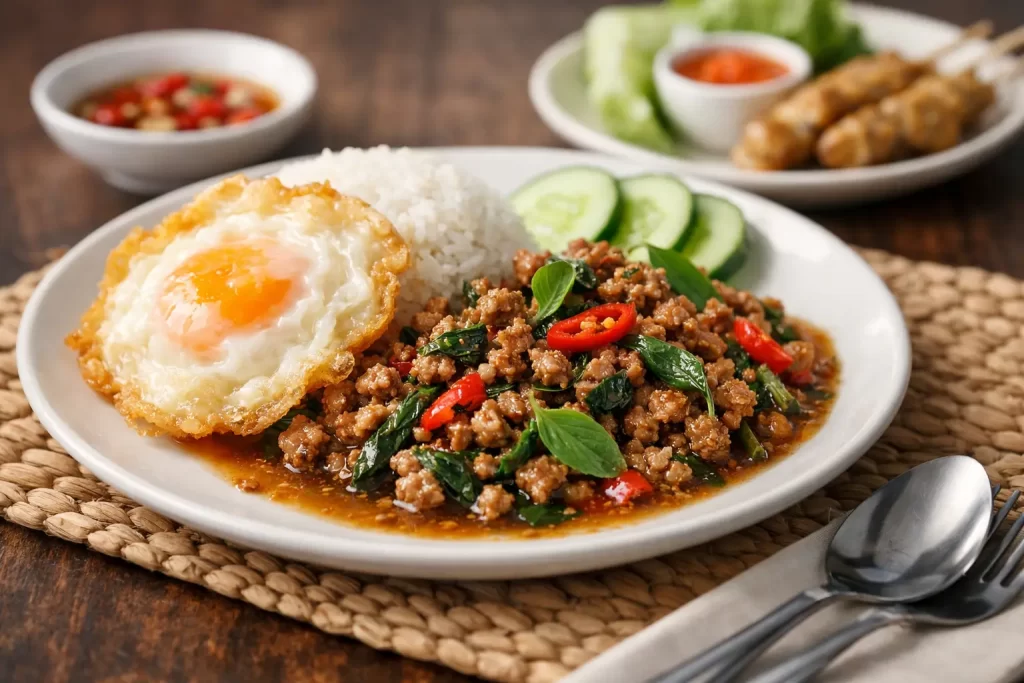
One whiff of sizzling basil, garlic, and chilies hitting a hot wok, and you know exactly why pad kra pao Malaysia searches keep showing up. This is the kind of dish that grabs the table’s attention before it even lands. It is fast, fiery, deeply savory, and built for the kind of meal people crave on a weekday lunch, a casual dinner out, or that moment when only something bold will do.
Pad kra pao has become one of those Thai dishes that Malaysian diners recognize quickly, even if the spelling varies from menu to menu. You might see pad kra pao, phat kaphrao, or basil stir-fry, but the appeal stays the same. It brings together fragrant holy basil-style flavor, minced or sliced protein, soy-based seasoning, chilies, and often a fried egg that turns the whole plate into comfort food with attitude.
What makes pad kra pao Malaysia so popular?
Part of the answer is simple – it fits the Malaysian palate beautifully. Diners here already appreciate punchy seasoning, heat, and meals that feel satisfying from the first bite. Pad kra pao delivers all three without being heavy or complicated. It is direct in the best way.
The other reason is balance. A good plate of pad kra pao tastes spicy, salty, slightly sweet, and aromatic all at once. The basil is not there as decoration. It is the soul of the dish. When it is cooked properly, it perfumes the wok and ties the stronger flavors together so the dish tastes exciting rather than harsh.
That balance matters because pad kra pao is easy to get wrong. If the sauce is too sweet, it starts tasting generic. If the basil is weak, the dish loses its identity. If the wok heat is too low, everything turns flat. The best versions feel lively and fresh, with just enough char to remind you that this dish was made for fast, high-heat cooking.
The heart of the dish is in the wok
Pad kra pao is not a fussy recipe, but it does ask for confidence. The garlic and chilies need to bloom quickly in oil. The protein has to cook fast without drying out. The seasoning should coat every bite without drowning the plate. Then the basil goes in at the end, just long enough to release its fragrance.
That final moment is what gives the dish its signature character. Done right, the basil stays vibrant and aromatic. Done poorly, it wilts into the background and the plate becomes just another stir-fried rice topping.
This is why pad kra pao often feels more impressive in person than it does on paper. It sounds simple. It rarely tastes simple. The flavor comes from timing, heat, and restraint.
Why the fried egg matters
Ask regular fans of pad kra pao and many will tell you the fried egg is not optional. The crispy edges, runny yolk, and richness soften the heat and pull the rice together. It creates contrast – spicy against creamy, savory against mellow, crisp against tender.
Could you enjoy pad kra pao without the egg? Of course. But the egg often turns a very good dish into the one people remember and reorder.
Pad kra pao is a fast meal that still feels special
One reason this dish works so well for modern diners is that it suits real life. It is quick enough for lunch, satisfying enough for dinner, and familiar enough for group dining where everyone wants something dependable but not boring.
That matters in Malaysia’s busy dining scene. People want food that arrives with energy. They want something that tastes worth leaving the office for or gathering friends around after work. Pad kra pao answers that need because it feels street-inspired and restaurant-worthy at the same time.
It also plays well with the rest of a Thai meal. You can pair it with tom yum, a refreshing drink, and another stir-fry for the table, or keep it simple and let the dish stand on its own. It does both jobs well.
What to expect when ordering pad kra pao in Malaysia
Not every version will taste exactly the same, and that is part of the reality of ordering this dish locally. Some kitchens lean heavier on sweetness because they are aiming for broad appeal. Others push the chili harder. Some use minced protein for a more traditional feel, while others use sliced cuts for a heartier texture.
None of these choices are automatically wrong. It depends on what kind of experience you want.
If you like your Thai food intense and closer to classic street-style flavors, you will probably prefer a version with assertive basil aroma, noticeable heat, and a sauce that stays savory first. If you are introducing someone to the dish for the first time, a slightly gentler version can still be satisfying as long as the basil and wok flavor remain clear.
The best approach is to look for a restaurant that respects the dish rather than treating it as just another menu filler. When a kitchen cares about Thai staples, you can usually taste it right away.
A dish that feels authentic without feeling intimidating
This is one reason pad kra pao continues to win over new diners. It carries real Thai character, but it is not difficult to understand. You do not need a long explanation to enjoy it. One bite tells the story.
That makes it ideal for mixed groups too. Some people at the table may want something soupy, some may go for noodles, and someone else wants a rice dish with a stronger punch. Pad kra pao fits naturally into that spread. It is approachable, but it still has personality.
For brands that serve modern Thai cuisine in a casual, welcoming setting, this dish makes perfect sense as a signature. It captures the energy people associate with Bangkok-style food while staying easy to order again and again. At Soi 55, that kind of bold and delicious taste is exactly what keeps a familiar favorite feeling exciting.
How to tell if a pad kra pao is really good
You do not need to be a food critic to spot a strong plate. Start with the aroma. You should smell basil, garlic, and chili right away. The rice should support the dish, not disappear under watery sauce. The protein should be well seasoned, and each spoonful should give you a little heat, a little savoriness, and a little herbal lift.
Texture matters more than people think. If everything is soft and one-note, the dish loses impact. A little crispness from the fried egg, a little bite from the chilies, and that glossy wok-tossed finish all help the plate feel complete.
It is also worth paying attention to how the spice is handled. Good heat builds. Bad heat overwhelms. You want the chili to wake up the dish, not flatten every other flavor.
Is pad kra pao always very spicy?
Not always, but it should have some edge. That edge is part of its charm. A completely mild version may still be tasty, yet it can miss the spirit of the dish. At the same time, not everyone wants an intense chili hit at lunch.
That is the trade-off many restaurants manage. Tone it down too much and the dish loses character. Push it too far and it becomes harder for casual diners to enjoy. The sweet spot is enough spice to feel exciting, with enough balance to keep you going back for another bite.
Why pad kra pao keeps earning repeat orders
Some dishes are popular because they photograph well. Pad kra pao earns loyalty because it eats well. It satisfies quickly, but it never feels plain. It has enough intensity to stand out and enough familiarity to become part of a regular order.
That repeat-order quality is a big deal. Diners often return to the meals they trust, especially when they know the kitchen can deliver consistent flavor every time. Pad kra pao has that dependable appeal. It feels like comfort food for people who still want their comfort food to come with spice, aroma, and a little swagger.
In a menu full of crowd-pleasing Thai favorites, this dish holds its place because it does not try too hard. It just tastes like what many people want more often than they admit – hot rice, bold seasoning, fragrant basil, and a plate that feels alive from the first bite to the last.
If you are deciding what to order the next time Thai food is on the table, pad kra pao is a strong bet. It is quick, flavorful, and full of character, which is exactly why it keeps earning its spot in Malaysia’s everyday dining rotation.